

Views: 0 Author: Site Editor Publish Time: 2026-08-31 Origin: Site


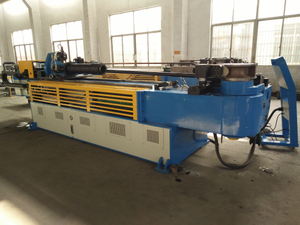
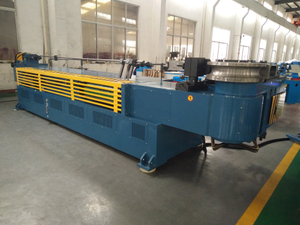
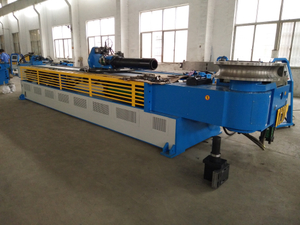
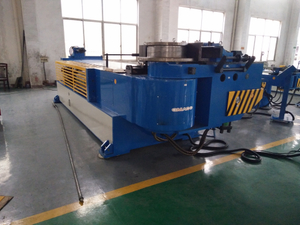
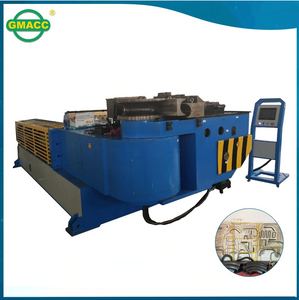
A metal pipe bending machine is industrial equipment used to form straight metal pipes or tubes into specific angles, curves, radii, and three-dimensional shapes without cutting the pipe into separate sections.
These machines are widely used when manufacturers need repeatable bends in materials such as carbon steel, stainless steel, aluminum, copper, and other metal tubing. Typical applications include automotive exhaust systems, furniture frames, construction components, boiler tubes, shipbuilding parts, HVAC systems, and industrial pipe assemblies.
Unlike manual bending methods, an industrial pipe bender controls the pipe, tooling, bending force, and bend angle so manufacturers can produce more consistent parts while reducing deformation, wrinkling, flattening, and dimensional variation.
For production environments, the real purpose of a metal pipe bending machine is therefore not simply to “bend a pipe.” It is to create a controlled bend that meets the required geometry while preserving the tube's usable cross-section and dimensional accuracy.
The exact process depends on the bending method, but a typical rotary-draw pipe bending machine starts by placing the metal tube into a set of forming tools.
The pipe is then secured by a clamp die while a bend die determines the required radius. As the bend die rotates, the tube is drawn around the die and permanently formed into the desired angle.
Additional tooling may be used when the pipe geometry becomes more demanding. A pressure die supports the outside of the tube during bending, while a mandrel can support the inside diameter and help reduce collapse or excessive ovality. A wiper die may also be used near the tangent point to control wrinkling, particularly on thin-wall tubes or tight-radius bends.
In an automated system, the sequence can include:
feeding → positioning → rotating → clamping → bending → releasing → repeating
Modern CNC systems can control several of these movements automatically, making it possible to produce multi-bend parts with repeatable dimensions.
GMACC Machinery's current pipe-bending range includes hydraulic, CNC, automatic, electric, single-head, and double-head machine configurations. Its CNC machines are designed for multi-axis control and programmable bending operations.
A metal pipe bending machine can process many types of tubing, but machine capacity and tooling must match the material properties.
Material | Typical Bending Consideration |
|---|---|
Carbon steel | Requires sufficient machine force and suitable tooling |
Stainless steel | Greater springback may require compensation |
Aluminum | Surface protection and deformation control are important |
Copper | Relatively formable, but thin walls may need internal support |
Alloy steel | Machine power and material strength must be considered |
Exhaust tubing | Often requires accurate multi-angle and 3D bending |
Square or rectangular tube | Requires tooling designed to control corner deformation |
GMACC Machinery currently lists copper, stainless steel, aluminum, carbon steel, alloy tubing, and exhaust tubing among the materials processed by its CNC pipe-bending equipment.
The material alone does not determine machine selection. Buyers should also consider:
outside diameter,
wall thickness,
tube shape,
bend radius,
bend angle,
material strength,
and required production speed.
A machine that easily bends a small copper tube may not have the capacity to bend a large-diameter thick-wall steel pipe.
Industrial pipe-bending equipment is available in several configurations. The correct choice depends largely on production volume, tube size, bend complexity, and required automation.
A hydraulic pipe bending machine uses hydraulic power to generate the force required to form the tube.
This type of machine is common in industrial applications because hydraulic systems can provide substantial bending force for steel, stainless steel, and other metal pipes. Depending on the design, the machine may operate manually, semi-automatically, or automatically.
GMACC Machinery describes its hydraulic pipe benders as using components such as an electric oil pump, high-pressure oil lines, working cylinders, clamping devices, and bending assemblies.
Hydraulic machines are often suitable when:
pipe strength is relatively high,
production requires stable bending force,
tube diameters are larger,
or the application does not require the full automation of a CNC system.
A CNC pipe bending machine uses computer numerical control to manage bending operations.
Instead of relying on an operator to manually position every bend, the machine can control parameters such as feeding length, tube rotation, and bend angle according to a stored program.
This makes CNC bending especially useful for parts containing multiple bends in different planes.
GMACC Machinery currently offers CNC pipe bending machines for applications including automotive, air-conditioning, boilers, bridges, ships, furniture, construction, and other pipe-processing industries.
The biggest advantage is repeatability.
Once a suitable program and tooling setup are established, the machine can reproduce the same part repeatedly with much less dependence on manual positioning.
Automatic pipe benders are designed for higher-volume production.
Depending on configuration, the machine may automatically handle:
tube feeding,
positioning,
rotation,
clamping,
bending,
and part sequencing.
GMACC Machinery's current automatic pipe-bending equipment uses PLC-based controls and programmable operation for high-speed production environments.
These machines are particularly useful when labor efficiency and cycle time are major purchasing considerations.
Electric pipe benders use electromechanical drive systems rather than relying entirely on hydraulic force.
They can be attractive for smaller or more flexible production environments where compact size, easier setup, and economical operation are important.
GMACC Machinery currently lists electric bending equipment for steel, copper, round, square, and exhaust tubing.
In everyday industrial use, the terms pipe bender and tube bender are often used interchangeably.
Technically, pipe and tube are dimensioned differently. Pipe is typically specified by nominal pipe size and schedule, while tubing is generally specified by actual outside diameter and wall thickness.
For bending-machine selection, however, the more important information is usually the actual workpiece dimensions and material.
A machine supplier will normally need to know:
outside diameter,
wall thickness,
material,
bend radius,
bend angle,
tube length,
and part geometry.
So rather than focusing too heavily on whether a product is called a “pipe bender” or “tube bender,” buyers should confirm whether the machine and tooling can process their exact part.
A mandrel is an internal support tool inserted into the pipe during bending.
Its purpose is to help control deformation on the inside of the tube, particularly when the bend radius is tight or the wall thickness is relatively thin.
Without sufficient support, the pipe may develop:
flattening,
excessive ovality,
wall collapse,
or wrinkling.
Mandrel bending is therefore frequently used where dimensional quality is important.
However, not every bend requires a mandrel. Large-radius bends and thicker-wall pipes may sometimes be formed successfully without internal support.
Whether a mandrel is necessary depends on the relationship between:
tube diameter + wall thickness + centerline radius + material + quality requirement
For manufacturers producing automotive, aerospace, exhaust, furniture, or precision industrial tubing, mandrel capability can be an important machine-selection factor.
Metal does not always remain at exactly the angle to which it is initially bent.
After bending force is released, elastic recovery causes the tube to move slightly back toward its original shape. This effect is called springback.
The amount varies according to:
material,
wall thickness,
bend radius,
tube diameter,
and mechanical properties.
Stainless steel, for example, can exhibit more springback than some more easily formed materials.
Modern CNC pipe benders can compensate for this by adjusting the programmed bend angle. This is one reason computer-controlled systems are valuable when manufacturers require consistent final dimensions across repeated production runs.
Metal pipe bending machines appear in a wide range of manufacturing industries because bent tubing is used in both structural and fluid-handling components.
Automotive manufacturers use tube bending for components such as exhaust pipes, seat frames, chassis-related tubing, fuel lines, and other formed parts.
Complex products may contain several bends with different angles and rotational positions, making CNC systems particularly useful.
Metal furniture frequently uses curved steel or aluminum tubing for:
chair frames,
table structures,
beds,
shelving,
and decorative components.
Here, appearance and repeatability may be just as important as structural performance.
Bent tubes and profiles are used for handrails, structural frames, decorative elements, canopies, and other fabricated components.
Large-radius applications may require different machines from tight-radius precision tube bending.
Copper and aluminum tubing used in heating, ventilation, refrigeration, and air-conditioning equipment frequently requires controlled bends while maintaining adequate internal flow area.
Shipbuilding, boilers, industrial machinery, and power-related applications can require steel or alloy pipes with precise routing and repeatable angles.
GMACC Machinery identifies power construction, highway and railway construction, boilers, bridges, ships, furniture, and decoration among the application areas for its CNC and automatic pipe-bending equipment.
One important reason manufacturers use pipe bending machines is to reduce the need to construct a curved path from several straight pieces and welded elbows.
A properly designed bend can provide:
fewer joints,
smoother geometry,
less welding,
reduced assembly work,
and a cleaner finished appearance.
In fluid-handling applications, reducing the number of welded connections can also simplify the component design.
However, bending is not automatically superior in every application. Very large pipe sizes, extremely tight geometry, field repairs, or low-volume fabrication may still justify welded fittings.
The decision should be based on engineering requirements and total manufacturing cost.
A successful bend must control more than the final angle.
Several types of deformation can occur if tooling, machine setup, or bending parameters are unsuitable.
Wrinkling usually develops on the inside radius where material is compressed.
Flattening or ovality occurs when the round tube loses too much of its original cross-sectional shape.
Wall thinning occurs mainly on the outside radius as the material stretches.
Springback changes the final bend angle after the load is released.
Surface marking can result from tooling contact, especially on polished stainless steel or aluminum parts.
In severe cases, the pipe may crack or buckle.
This is why pipe bending is not simply a question of applying more force. Correct tooling, bend radius, material selection, support, machine control, and lubrication all influence the final result.
Choosing a machine should begin with the part you need to manufacture.
Do not start by asking only:“What size pipe bender do I need?”
Instead, define the complete application.
Provide the manufacturer with:
material,
outside diameter,
wall thickness,
round/square/rectangular profile,
and maximum part length.
These parameters establish the basic machine capacity.
The supplier should also know:
minimum centerline radius,
maximum bend angle,
number of bends per part,
distance between bends,
and whether the bends occur in one plane or several planes.
A simple single-angle part may require far less automation than a complex three-dimensional exhaust component.
A low-volume fabrication shop may not need the same system as an automotive supplier producing thousands of identical parts.
Production need | Typical machine direction |
|---|---|
Low-volume basic bending | Manual / electric / basic hydraulic |
Medium-volume production | NC or semi-automatic hydraulic |
High-volume repeated parts | Automatic or CNC |
Complex multi-plane parts | Multi-axis CNC |
Symmetrical components | Double-head bending machine |
This is only a general guide. Actual machine capacity must still be checked against the workpiece specification.
Buyers should state how much deformation is acceptable.
For example:
maximum ovality,
allowable wall thinning,
bend-angle tolerance,
surface-finish requirement,
and dimensional repeatability.
If the product is decorative furniture tubing, surface condition may be critical. If it is a precision automotive component, geometry and repeatability may be the main priorities.
A detailed inquiry makes machine selection much more efficient.
For a new project, prepare:
Tube material
Outside diameter
Wall thickness
Tube shape
Maximum tube length
Minimum bend radius
Maximum bending angle
Number of bends
2D or 3D part drawing
Required production rate
Accuracy requirement
Current manufacturing problem, if replacing another process
A sample part, drawing, or product photo can also be useful.
GMACC Machinery specifically states that customers can provide a sample model photo so the company can recommend a suitable machine.
These two machines both bend metal, but they serve different geometries.
A rotary-draw pipe bender is generally used when the part requires relatively controlled bends around a defined bend radius.
A pipe rolling machine typically uses three rollers and gradually forms the workpiece into a broad curve, ring, or large-radius arc.
For example:
an automotive exhaust elbow → pipe bending machine
a structural arch → rolling machine
a furniture frame with several tight bends → CNC pipe bender
a large circular ring → three-roll bending machine
Understanding the geometry first prevents buyers from selecting the wrong type of equipment.
For complex production, CNC control changes the role of the machine from a powered bending tool into an automated manufacturing system.
Depending on configuration, the machine can coordinate:
feed length,
pipe rotation,
bend angle,
multiple bend sequences,
tooling movements,
mandrel operation,
and stored production programs.
GMACC Machinery's CNC equipment includes multi-axis models, and its current range includes large-diameter, mandrel, 3-axis, hydraulic, and automatic pipe-bending solutions.
This is especially important when a finished component contains several bends that must maintain consistent positional relationships.
For a factory, the benefit is not simply more automation. It is reduced dependence on manual repositioning and greater repeatability from part to part.
Maximum bending diameter is an important specification, but it should not be the only purchasing criterion.
Two pipes with the same outside diameter can require very different bending force if they have different:
wall thicknesses,
materials,
bend radii,
or profiles.
Likewise, two machines that both claim to bend a 76 mm pipe may have very different capabilities when the job requires stainless steel, tight centerline radii, thin walls, or multi-plane CNC bending.
A professional machine evaluation should therefore consider the complete part, not one number on a specification sheet.
GMACC Machinery supplies pipe- and tube-processing machinery under the GMACC product range, including pipe bending, tube bending, pipe cutting, end forming, double-head bending, and related equipment. Its current pipe-bending portfolio includes hydraulic, CNC, automatic, electric, single-head, and double-head configurations.
For buyers comparing equipment, the main pipe bending machine page provides access to hydraulic, CNC, automatic, electric, metal-tube, and other machine categories.
For applications requiring programmable multi-axis operation, buyers can also review GMACC Machinery's CNC pipe bending machine range.
If your priority is bending force and industrial hydraulic operation, the hydraulic pipe bending machine category provides another relevant starting point.
A metal pipe bending machine is equipment used to permanently form metal pipes and tubes into specific curves and angles while controlling the tube's geometry.
Depending on machine capacity and tooling, pipe benders can process materials such as carbon steel, stainless steel, aluminum, copper, and alloy tubing.
A hydraulic bender primarily refers to the power system used to generate bending force. A CNC bender uses computer control to automate movements such as feeding, rotation, and bend angle. Many CNC machines also use hydraulic systems.
Not always. A mandrel is mainly used when internal support is needed to control wrinkling, flattening, or collapse, especially on thin-wall tubes and tight-radius bends.
Yes, if the machine and tooling are designed for square or rectangular profiles. Tooling must control corner deformation during bending.
Common industries include automotive, furniture, HVAC, construction, shipbuilding, boilers, transportation, metal fabrication, and industrial equipment manufacturing.
Start with the tube material, diameter, wall thickness, bend radius, bend angle, part geometry, production volume, and accuracy requirement. These specifications allow the supplier to recommend an appropriate machine and tooling setup.
A metal pipe bending machine is much more than a device that forces a tube into a curve. It is a controlled forming system designed to produce repeatable bends while managing problems such as wrinkling, flattening, springback, and wall thinning.
For simple jobs, a basic hydraulic or electric machine may be sufficient. For high-volume or complex multi-angle components, CNC and automatic equipment can provide greater repeatability and production efficiency.
The best machine choice therefore starts with the finished part:
material → tube size → wall thickness → bend radius → geometry → production volume → accuracy
If you are selecting equipment for a new project, send GMACC Machinery your tube dimensions, material, drawing or sample, bend requirements, and expected output. This gives the supplier the information needed to recommend an appropriate machine instead of simply matching a maximum pipe diameter.