




Views: 0 Author: Site Editor Publish Time: 2026-10-09 Origin: Site


Have you ever wondered how straight pipes are transformed into smooth, accurate curves without cracking or losing their shape? Pipe bending machines use controlled force and specialized tooling to create precise bends quickly and consistently. They help manufacturers reduce material waste, limit welding, and produce stronger parts with a clean finish. From automotive exhaust systems and construction frames to furniture, shipbuilding, and industrial pipelines, these machines support a wide range of applications.
In this post, you’ll discover how pipe bending machines work, where they are used, and how they improve production speed, accuracy, and efficiency.

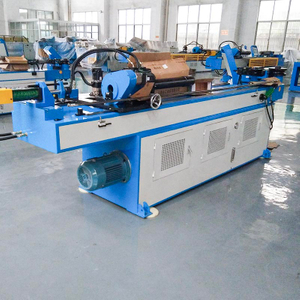
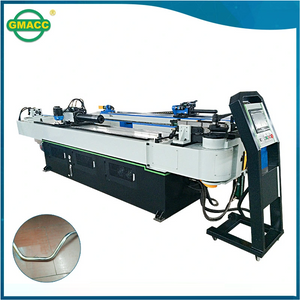
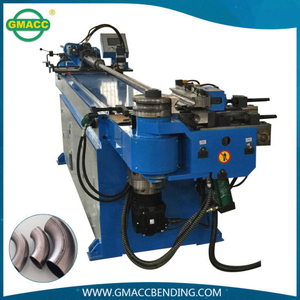
A pipe bending machine is a specialized tool designed to shape pipes into desired angles and curves without damaging their structure. It helps manufacturers create precise bends that fit specific designs or functional requirements. This machine plays a vital role in industries where pipes need to be formed for frameworks, fluid transport, or structural components.
Pipe bending machines handle various pipe types and materials, including:
Steel pipes: Common in construction and automotive industries.
Aluminum pipes: Used for lightweight structures.
Copper pipes: Popular in plumbing and HVAC systems.
Stainless steel pipes: Preferred for corrosion resistance and durability.
These machines can bend pipes of different diameters and thicknesses, depending on the machine’s capacity and tooling.
Although often used interchangeably, pipe bending and tube bending have subtle differences:
Aspect | Pipe Bending | Tube Bending |
|---|---|---|
Shape | Usually round pipes | Can include round, square, or rectangular tubes |
Wall Thickness | Generally thicker walls | Often thinner walls |
Application | Fluid transport, structural pipes | Precision applications like automotive frames, furniture |
Bending Precision | Moderate precision | High precision required |
Pipe bending machines tend to focus on pipes that carry fluids and gases, while tube bending machines often handle more delicate or precise applications. However, many modern machines can perform both functions depending on tooling and settings.
Note: Selecting the right machine depends on pipe material, diameter, and the precision needed in the final product.
Pipe bending machines use several techniques to shape pipes without causing damage. The most common methods include:
Rotary Draw Bending: Uses a rotating die to bend the pipe around a fixed radius, ideal for precise bends.
Compression Bending: The pipe is pushed against a stationary bend die, suitable for large radius bends.
Roll Bending: The pipe passes through rollers that gradually form the bend, often used for large radius or spiral bends.
Mandrel Bending: A mandrel inserted inside the pipe supports it during bending to prevent deformation, especially for thin-walled pipes.
Each technique suits different pipe sizes, materials, and desired bend shapes.
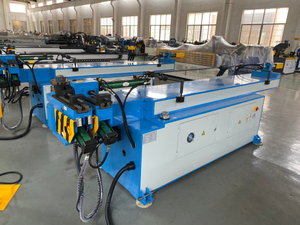
A typical pipe bending machine includes:
Bending Die: Shapes the pipe to the desired angle and radius.
Clamp Die: Holds the pipe firmly during bending.
Pressure Die: Applies force to ensure the pipe follows the bending die.
Mandrel (optional): Supports the pipe internally to avoid wrinkling.
Rotary Arm or Rollers: Moves the pipe around the bending die.
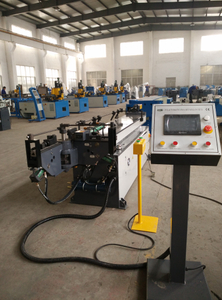
Control System: Operates the machine, either manually or automatically.
These components work together to ensure smooth, accurate bends.
Setup: Select and install the appropriate dies and mandrel for the pipe size and bend radius.
Loading: Place the pipe into the machine, securing it with the clamp die.
Bending: The rotary arm or rollers move the pipe around the bending die while the pressure die applies force.
Mandrel Support: If used, the mandrel moves inside the pipe to maintain shape.
Release: Once the bend reaches the desired angle, the pipe is unclamped and removed.
Inspection: Check the bend for accuracy and defects.
This process ensures the pipe bends without kinks or flattening.
Feature | Manual Bending | Automated Bending |
|---|---|---|
Operation | Hand-controlled | CNC or computer-controlled |
Precision | Moderate, depends on operator | High, consistent bends |
Speed | Slower, labor-intensive | Faster, suitable for mass production |
Flexibility | Good for small batches or custom jobs | Ideal for repetitive, large-scale jobs |
Cost | Lower initial investment | Higher upfront cost, lower per unit cost over time |
Automated machines boost productivity and reduce human error, while manual machines offer simplicity and lower cost for small runs.
Electric pipe bending machines use electric motors to drive the bending process. They provide precise control over speed and angle, making them ideal for jobs requiring high accuracy and repeatability. These machines are generally quieter and cleaner since they do not rely on hydraulic fluids. They suit small to medium production volumes and are often more energy-efficient.
Advantages of electric pipe bending machines include:
Fast setup and cycle times
High precision and repeatability
Lower maintenance costs
Environmentally friendly operation
Ideal use cases:
Small batch production
Complex bends needing fine control
Workshops prioritizing clean and quiet equipment
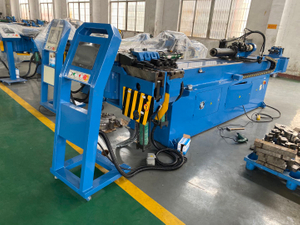
Hydraulic pipe bending machines rely on hydraulic cylinders to generate the force needed for bending. They offer powerful bending capabilities, making them suitable for thicker pipes or larger diameters. These machines handle heavy-duty applications and can maintain consistent pressure throughout the bending cycle. They often cost more to maintain due to hydraulic fluid management but excel in strength and durability.
Advantages of hydraulic pipe bending machines include:
Ability to bend large diameter and thick-walled pipes
High force output for tough materials
Smooth bending action for complex shapes
Robust construction for industrial use
Ideal use cases:
Large-scale industrial production
Heavy or thick pipe bending
Applications requiring strong bending force
Feature | Electric Pipe Bending Machines | Hydraulic Pipe Bending Machines |
|---|---|---|
Power Source | Electric motors | Hydraulic cylinders |
Precision | High precision, suitable for delicate bends | Strong force, suitable for heavy bends |
Maintenance | Lower, no hydraulic fluids | Higher, requires hydraulic fluid upkeep |
Noise and Cleanliness | Quieter, cleaner operation | Noisier, requires fluid management |
Production Volume | Small to medium batches | Medium to large batches |
Best for | Lightweight pipes, precision work | Heavy pipes, thick materials |
Choosing between electric and hydraulic depends on your production needs, pipe sizes, and material types. Electric machines suit manufacturers needing speed and precision for smaller pipes. Hydraulic machines fit industries requiring power for larger, tougher pipes.
Pipe bending machines play a crucial role in construction by shaping pipes for structural frameworks, handrails, and decorative architectural features. Bent pipes provide strength and aesthetic appeal in buildings, bridges, and public spaces. Curved pipes can form arches, supports, and complex shapes that are difficult to achieve with straight pipes alone. This flexibility helps architects and engineers bring creative designs to life while maintaining structural integrity.
In the automotive industry, pipe bending machines are essential for producing exhaust systems, roll cages, chassis frames, and fuel lines. These components require precise bends to fit within compact spaces and meet safety standards. Accurate bending ensures smooth fluid flow in exhaust and fuel systems, enhancing vehicle performance. Automated bending machines increase production speed while maintaining consistent quality across thousands of parts.
Bent pipes are widely used in HVAC (heating, ventilation, and air conditioning) systems for ductwork, piping, and ventilation channels. Pipe bending machines create smooth bends that minimize airflow resistance and reduce noise. This improves system efficiency and energy savings. Custom bends allow pipes to navigate around obstacles, fit within tight spaces, and connect different system components seamlessly.
Beyond construction, automotive, and HVAC, pipe bending machines serve many other industries:
Shipbuilding: Pipes for fuel, water, and exhaust systems require precise bends to fit complex ship layouts.
Oil and Gas: Bent pipes are used in pipelines, refineries, and offshore platforms.
Furniture Manufacturing: Metal frames and supports often use bent pipes for ergonomic and stylish designs.
Agriculture: Irrigation systems and machinery incorporate bent pipes for durability and functionality.
Each application benefits from the machine’s ability to produce consistent, high-quality bends that meet specific technical requirements.
Tip: When selecting a pipe bending machine for your industry, consider the typical pipe sizes, materials, and bend complexity to ensure the machine can meet your production needs efficiently.
Pipe bending machines offer exceptional flexibility in design and production. They allow manufacturers to create complex shapes and curves that would be difficult or impossible to achieve manually. This flexibility supports creative architectural designs, intricate automotive components, and customized industrial parts. By adjusting the machine’s settings or changing the dies, operators can produce a wide range of bend radii and angles, accommodating diverse project requirements. This adaptability also enables quick changeovers between different pipe sizes and materials, making it easier to handle small batches and custom orders efficiently.
One of the key advantages of pipe bending machines is their ability to conserve material while maintaining the pipe’s structural integrity. Unlike cutting and welding, bending shapes pipes without weakening them or causing cracks and wrinkles. Proper bending techniques ensure the pipe’s wall thickness remains consistent, reducing the risk of deformation. This preservation of material strength is crucial for applications where pipes must withstand pressure, load, or environmental stress. Additionally, bending reduces waste by eliminating the need for excess pipe length or multiple joints, leading to cost savings and more sustainable production.
Automation in pipe bending machines significantly improves time and cost efficiency. Automated systems use CNC controls to perform precise bends rapidly and consistently. This reduces manual labor, minimizes errors, and speeds up production cycles. Automated machines can run continuously and handle high volumes without fatigue, making them ideal for mass production. By cutting setup times and increasing throughput, companies lower operational costs and boost profitability. Moreover, automation enhances repeatability, ensuring every bent pipe meets exact specifications, which reduces rework and material scrap.
Pipe bending machines deliver superior precision and quality compared to manual methods. The use of advanced control systems and high-quality tooling ensures bends are accurate to the desired angle and radius every time. This precision is essential for components that must fit perfectly in assemblies or meet strict industry standards. High-quality bends also improve the overall appearance and performance of the final product. Consistent quality reduces inspection times and customer complaints, strengthening a company’s reputation and competitive edge.
Tip: Regularly calibrate your pipe bending machine and use appropriate tooling to maintain high precision and extend the machine’s lifespan.
Selecting the right pipe bending machine starts by assessing your production needs. Consider how many pipes you need to bend daily or monthly. High production volumes usually call for automated machines to maintain speed and consistency. For smaller batches, manual or semi-automatic machines might suffice.
Next, evaluate the pipe size. Machines have limits on the diameter and wall thickness they can handle. Larger or thicker pipes require more robust machines, often hydraulic models. Smaller or thinner pipes can be bent using electric machines or less heavy-duty equipment.
Material type matters too. Harder materials like stainless steel or thick-walled pipes need machines with higher bending force. Softer metals like aluminum or copper require less power but more precision to avoid damage. Knowing your pipe material helps choose a machine that can bend without flaws.
Electric pipe bending machines excel at precision and speed for small to medium pipes. They use electric motors, making them energy-efficient, quieter, and easier to maintain. If your work involves thinner pipes or complex bends, electric machines offer excellent control.
Hydraulic machines provide greater force, making them ideal for thick, heavy, or large-diameter pipes. They handle tough materials and demanding bends but require more maintenance due to hydraulic fluid systems. They suit industries needing power and durability for large-scale production.
Your choice depends on balancing precision, power, maintenance, and production scale. For example, a workshop producing custom exhaust pipes might prefer electric machines, while a factory bending thick steel pipes for construction frames may choose hydraulic machines.
Pipe bending machines vary widely in features and capabilities. Consulting experts ensures you select a machine tailored to your exact needs. Specialists can analyze your production volume, pipe types, and bend complexity to recommend the best model.
Customization is often key. Machines can be equipped with specific dies, mandrels, or automation options to optimize performance. A tailored machine reduces downtime, improves quality, and increases efficiency.
Experts also help with training, maintenance plans, and upgrades, ensuring your investment delivers long-term value.
Tip: Before purchasing, clearly define your production goals and pipe specifications, then seek expert advice to select a pipe bending machine that fits your unique needs and budget.
Automation has transformed pipe bending by integrating computer-controlled systems that manage every step of the bending process. Modern machines use CNC (Computer Numerical Control) technology to precisely control bend angles, radii, and pipe positioning. Automation reduces human error, increases repeatability, and allows operators to program complex bending sequences. This integration also enables real-time monitoring and adjustments, ensuring consistent quality throughout production runs.
Complete pipe bending cells connect every production stage in one automated process:
Automatic Feeding → Precision Cutting → Programmed Bending → Finished-Part Sorting
Pipes are first loaded and positioned automatically. They are then cut to the required length before the bending machine forms the programmed angles and curves. After bending, finished parts are sorted by type, size, or production order.
This connected workflow reduces manual handling, shortens cycle times, and increases production output. It also lowers labor costs and improves safety by reducing operator contact with heavy or moving parts.
Recent innovations in pipe bending machines include:
Adaptive bending technology: Machines adjust bend parameters on the fly based on pipe material and thickness to avoid defects.
Robotic arms: Robots assist in loading, unloading, and positioning pipes, further reducing manual labor.
Advanced sensors and cameras: These monitor pipe alignment and bend quality in real time, enabling immediate corrections.
IoT connectivity: Machines connect to factory networks for data collection, predictive maintenance, and remote diagnostics.
User-friendly interfaces: Touchscreen controls and software simplify programming and reduce training time.
These advancements support higher productivity, better quality control, and more flexible manufacturing.
Automation accelerates pipe bending by enabling continuous operation with minimal downtime. Machines run faster and more precisely than manual methods, producing uniform bends that meet tight tolerances. Automated quality checks catch defects early, reducing scrap and rework. Operators can oversee multiple machines simultaneously, maximizing efficiency.
Moreover, automation supports complex bend patterns and customized production runs without sacrificing speed. This flexibility helps manufacturers respond quickly to changing market demands and maintain competitive advantage.
Investing in a pipe bending machine offers flexibility, precision, and material savings. It enhances manufacturing efficiency and product quality through automation and advanced technology. Consulting experts ensures the right machine fits specific needs, maximizing value and productivity. Zhangjiagang King Macc provides reliable pipe bending machines designed to deliver consistent performance and tailored solutions for diverse industries. Their products help businesses achieve superior results with reduced costs and improved operational efficiency.
A: A pipe bending machine is a tool designed to bend pipes into specific angles and curves without damaging them, used across various industries for precise shaping.
A: It uses dies, clamps, and bending techniques like rotary draw or mandrel bending to shape pipes accurately and maintain structural integrity.
A: It offers higher precision, faster production, material conservation, and consistent quality compared to manual methods.
A: Price depends on machine type (electric or hydraulic), capacity, automation level, and customization options.
A: Electric machines provide precision and efficiency for smaller pipes, while hydraulic machines offer greater force for thick, large-diameter pipes.
A: Regularly inspect dies and mandrels, calibrate controls, and maintain hydraulic fluids or electrical components to ensure smooth operation.