
Views: 0 Author: Site Editor Publish Time: 2026-07-02 Origin: Site


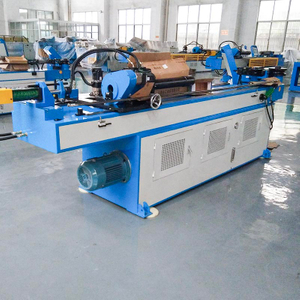
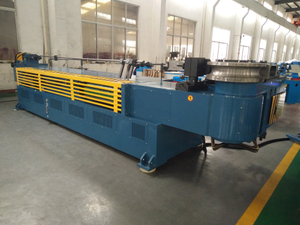
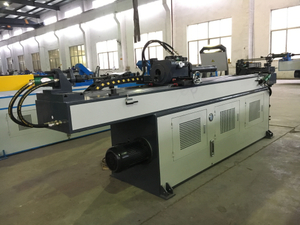
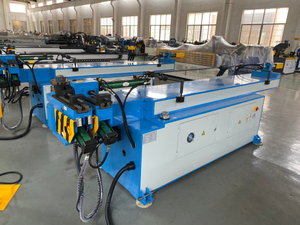
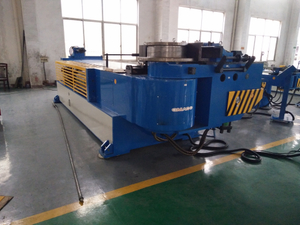
A pipe bending machine helps you bend metal pipes and shapes without using heat. These machines are used in many places like car making, building ships, and construction. Here is how different jobs use them:
Industry | Typical Project Scale |
|---|---|
Automotive | Small-scale operations |
Shipbuilding | Large-scale applications |
Construction | Small to large-scale projects |
Pipe bending machine Manufacture adds smart controls and safety tools to keep up with more people needing them. Picking the right machine makes your work better and fits what you want.
Pipe bending machines change the shape of metal pipes without using heat. They are helpful in car making, building, and ship work. Cold bending uses force at room temperature to keep metal strong. This stops dents or cracks from happening. Manual benders are easy to carry and cost less. Hydraulic, electric, and CNC machines are stronger and faster. They also help with hard jobs that need more care. Picking the best machine depends on what the pipe is made of. You also need to think about pipe size, bend radius, and what the project needs. This helps you get better results. Taking care of the machine is important. Oiling and checking for leaks helps it work well and last longer.
A pipe bending machine helps you bend metal pipes and tubes into different shapes. You do not need to use heat. These machines are used to make many things in metalworking. For example, you can bend pipes for building frames. You can also make car exhaust systems or playground equipment. Pipe bending machines help make parts for HVAC systems, tanks, and furniture too.
Here are some ways you can use pipe bending machines:
Bend structural steel and roll metal shapes
Make hydraulic lines and fuel pipes for cars and airplanes
Produce pipes for playgrounds and gym equipment
Create pipes for cooling and heating systems
Build parts for farm and transport equipment
Shape metal for factory tanks and ductwork
Design metal accents and furniture pieces
Pipe bending machines use cold bending. This means you do not heat the metal. The machine uses strong force to bend the pipe at room temperature. This keeps the metal strong and stable. The machine pushes or pulls the pipe to make the shape you want. You must control the speed and pressure carefully. If you go too fast or use too much force, the pipe can get dents or cracks.
Cold bending works like this:
Uses mechanical force at room temperature
Keeps the metal’s structure the same
Bends the pipe by stretching and squeezing it
Needs careful control to stop mistakes
There are many good reasons to use a pipe bending machine instead of bending pipes by hand. Machines help you work faster and make fewer mistakes. You can make more complex shapes and get the same results every time.
Advantage | Pipe Bending Machines | Manual Methods |
|---|---|---|
Precision | Tolerances as tight as ±0.025 mm | 1-3 mm tolerance range |
Efficiency | Continuous 24/7 operation possible | Limited to manual effort |
Waste Reduction | Less material waste | More waste from errors |
Complex Geometry | Handles intricate shapes | Only simple bends |
Quality Consistency | Uniform results with automation | Results may vary |
There are many kinds of tube and pipe bending machines. Each kind has special features for certain jobs. Knowing what each one does helps you pick the right one.
Manual pipe bending machines are simple and cheap. You use your own strength to bend pipes. They are small and light, so you can carry them. These machines are good for small jobs or work at different places. They work best for easy bends and small pipes.
You might use manual tube and pipe benders for:
Hand railings
Roll cages
DIY projects
Custom fabrications
Manual machines are for light work. You can set them up fast. They are good for quick jobs or repairs. If you want a tool for simple bends and easy moving, this is a good pick.
A hydraulic pipe bending machine uses fluid under pressure to bend pipes. It gives you more power for bigger or thicker pipes. These machines are strong and very exact. You see them where hard work is needed.
Industries that use hydraulic tube and pipe bending machines include:
Construction: Bending pipes for building frames
Automotive: Making parts like exhaust systems
Aerospace: Bending for fuel and hydraulic lines
Shipbuilding: Making strong pipes and frames
Furniture manufacturing: Shaping tricky designs
Industrial equipment manufacturing
Hydraulic bending machines are the strongest for big jobs. They give you the power for tough work and keep bends correct.
Electric pipe bending machines use motors for power. They bend pipes fast and the same way each time. Many have screens or buttons to set the angle and save your favorite bends. They work well with big pipes and thick metal.
Here is how electric and hydraulic models compare:
Feature | Electric Pipe Bending Machines | Hydraulic Pipe Bending Machines |
|---|---|---|
Power Source | Electrically powered for automated bending | Hydraulic power for substantial force |
Control | Programmable angle and bending memory | Advanced programming options for precision |
Accuracy | High repeatability and accuracy | Consistent and repeatable bends |
Control Interface | Touchscreen or digital control panels | Not specified |
Material Handling | Handles larger diameters and thicker materials | Designed for large diameters and thick walls |
Speed | Faster operation and increased productivity | Suitable for high-volume applications |
You use electric tube and pipe benders for:
Electrical conduit work
Plumbing
HVAC
Automotive
Aerospace
Electric machines are good for medium or big jobs. They are fast and accurate, so they are great for busy shops.
CNC tube bender machines are the most advanced. You control them with computers. They use smart software, sensors, and motors for very exact bends. Some CNC tube benders use AI to change settings and guess how the metal will move. This gives you perfect bends every time.
Modern CNC tube and pipe bending machines, like single-head models with touch screens, show new technology. Many work with Italian brands for the best design and control. You can program hard bend steps and even test them on a screen before bending real pipes.
Key features of CNC tube benders include:
AI integration for smarter bending
Advanced sensors for better control
Automatic material handling and tool changes
Servo motors for tight tolerances
Software for easy programming and simulation
Industries that benefit most from CNC tube bender machines:
Industry | Benefits of CNC Pipe Bending Machines |
|---|---|
Aerospace | Needed for hydraulic lines, fuel systems, and parts that must be exact. |
Automotive | Important for safety and performance, and for fitting parts in small spaces. |
Electronics | Needed for parts that must be very exact, to keep products safe and working. |
Construction | Used for strong, nice-looking, and space-saving building parts. |
You find CNC tube benders where you need hard bends, fast work, and no mistakes. These machines are best for automatic pipe bending machine needs in high-tech places.
Roll bending machines use three or four rolls to make pipes and metal into curves, cones, or cylinders. You put the material between the rolls, and the machine bends it as it moves. You can pick symmetrical or asymmetrical types for the shape you want.
Characteristics | Use Cases |
|---|---|
Number of rolls: three or four | Bending sheet metal into cylinders |
Symmetrical and asymmetrical types | Bending into cones and other curved forms |
Ability to bend various materials | Processing sheet metal into different shapes |
Roll bending machines are good for making big, smooth curves. You use them for tanks, building features, and other jobs that need round shapes.
You can pick the right tube and pipe bending machines by thinking about the material, size, and shape you need. Manual and hydraulic tube and pipe bending machines are good for most easy and hard jobs. Electric and CNC models give you speed, accuracy, and smart features for new factories. If you want the newest automatic pipe bending machine, look for CNC, touch screens, and smart controls.

When you want to bend a pipe, you must pick the right way. Each bending process works best for certain pipes and shapes. Here are three common ways to bend pipes and tubes.
Rotary draw bending gives you lots of control. You use a special die to hold the pipe. A moving arm pulls the pipe around the die. This makes very exact angles and tight curves. You can use rotary draw bending with steel, stainless steel, brass, copper, and aluminum. It is good for car parts, airplanes, HVAC, furniture, and handrails.
Materials | Project Types |
|---|---|
Steel | Automotive components |
Stainless Steel | Aerospace applications |
Brass | HVAC systems |
Copper | Furniture manufacturing |
Aluminum | Pipe fittings, instrument tubing, handrails |
Tip: If you need very exact bends again and again, rotary draw bending is the best way.
Mandrel bending uses a flexible rod called a mandrel inside the pipe. This keeps the pipe from folding or wrinkling. You get smooth bends and the pipe stays strong. Mandrel bending is great for thin-walled tubes. You can use this bending process for HVAC, fluid lines, and jobs that need tight turns.
Mandrel bending helps you:
Make very exact and smooth bends
Bend pipes with tight turns
Keep thin pipes strong and neat
Stop pipes from getting squished
Stops pipes from changing shape so bends look nice.
Keeps the pipe strong and lets things flow inside.
Makes bends smooth and stops wrinkles.
Mandrel bending is a way to keep pipes looking good and working well. You do not block the inside and the pipe stays strong.
Ram bending is a simple way to bend pipes. You push the pipe against a fixed die with a ram. This method is fast but you do not get much control. Ram bending is good for easy bends in building or fixing things. It is not good for jobs that need very exact bends or many curves. Sometimes the pipe can get bent out of shape or scratched.
Note: Ram bending is best for rough shapes. If you need very exact bends, use rotary draw or mandrel bending.
Feature | Rotary Draw Bending | Mandrel Bending | Ram Bending |
|---|---|---|---|
Precision | High | High | Low |
Repeatability | High | High | Low |
Tight Radii Capability | Yes | Yes | Limited |
Thin-Wall Capability | Excellent | Excellent | Poor |
Surface Finish Quality | Excellent | Excellent | Poor |
Tooling Cost | Higher | Higher | Low |
Best Use Cases | Automotive, HVAC | Fluid lines | Construction |
You can pick the bending process that fits your job. If you want smart features, choose machines with touch screens and smart controls. These machines help you bend pipes more safely and with better results.
You use your hands to run manual pipe bending machines. First, you put the pipe in the machine. Then you pull or push a lever to bend it. This way depends on your strength and how well you work. Manual bending is good for small jobs and easy shapes. It takes more time and can cause mistakes. Different people may get different results. Manual benders are not as fast or exact as bigger machines. For example, one bend might take up to a minute. Electric machines can do it in just a few seconds. Manual bending is best for light work.
Hydraulic and electric machines use strong systems to bend pipes. Hydraulic machines use fluid pressure to move a bending arm. This gives you lots of power for thick pipes. Electric machines use motors to turn gears and bend the pipe. You can set the angle and let the machine do the work. Both types are more exact and faster than manual ones. Hydraulic machines use servo motors for careful control. You can bend big pipes quickly and neatly.
Hydraulic machines: Use cylinders and chains for tough bends.
Electric machines: Use motors for quick, repeatable bends.
CNC pipe bending machines use computers to control each step. You type in the bend data on a touch screen. The machine saves your settings and follows them closely. CNC machines can bend with very tight tolerances. You get steady results for long jobs. Servo drives help stop mistakes and keep bends right. You can make tricky shapes over and over. CNC automation is needed for jobs where accuracy is very important.
Feature | Accuracy/Performance |
|---|---|
Bending accuracy | ±0.1° |
Feeding accuracy | ±0.05 mm |
Stability | Stable for long runs |
Roll bending machines use three or four rollers to make curves. You put the pipe between the rollers. The machine moves the pipe and bends it as it rolls. You can make big arcs, cones, or cylinders. Roll bending is good for tanks and building features that need smooth curves. You change the shape by moving the rollers. Roll bending is easy and works well for round shapes.
Pipe bending machines are used in many industries. You see their work every day, even if you do not know it. These machines help with many jobs. A metal sheet bending machine is also used for different projects.
People use pipe bending machines a lot in plumbing and construction. They shape pipes for water, gas, and building supports. Some common uses are:
Ram bending is used in muffler shops and for fixing exhausts.
Press bending works for conduit and small plumbing pipes.
Roll bending helps make metalwork, railings, and custom hoops.
A metal sheet bending machine can make handrails that curve on stairs. These machines help you finish work faster and make it look better.
Automotive and aerospace jobs need high accuracy and safety. Pipe bending machines make parts that fit in small spaces and handle stress. Here are some ways they are used:
Aircraft tube bending makes lines for fuel and hydraulics that face tough conditions.
Automotive exhaust systems need tricky bends for better work and less pollution.
You use these machines for many jobs, like making car frames and airplane parts.
Pipe bending machines are needed in shipbuilding and oil & gas work. You need strong and exact bends for big projects. The table shows how these machines are used:
Industry | Application Description |
|---|---|
Shipbuilding | You make exact bends so parts fit right in a ship’s frame. |
Oil & Gas | You bend big pipes and meet special needs for oil and gas piping. |
These machines help with many jobs, making sure pipes fit and work well.
Pipe bending machines are used in furniture and metalwork to make smooth curves and cool shapes. A metal sheet bending machine helps you make chairs, tables, and art. You can shape metal for style and strength. These machines let you try new ideas and finish with a pro look.
Tip: If you pick the right machine, your work gets easier and more creative.
When you pick a pipe bending machine, you need to think about the material and size of your pipes. Each machine works best with certain metals and pipe diameters. Here are some things to check:
Make sure the machine matches the material you want to bend. Some machines work better with steel, while others handle aluminum or copper.
Check the pipe size range. Large machines bend big pipes but may not work well for small ones.
Look at how the machine handles ovality and wall thinning. This helps you keep your pipes strong and looking good.
Think about how long you want the machine to last. A strong machine can work for 10 to 20 years.
You must also look at the bend radius for your project. The bend radius is how tight the curve in your pipe will be. Real projects have limits, like space or other pipes in the way. Here are some tips:
Tight bends need machines with special dies or mandrels.
Carbon steel bends tighter than stainless steel.
Retrofit jobs need bends that match old pipes exactly.
Think about cost. Tighter bends can cost more to make.
Tip: Always measure your space and check your material before you choose your bend radius.
Your budget and how you plan to move the machine matter too. Manual benders cost less and are easy to carry. Hydraulic and electric machines cost more but work faster. CNC machines are the most expensive but give you the best results for big jobs.
Manual benders are great for small jobs or remote places.
Hydraulic and electric benders fit busy shops.
CNC machines are best for factories with lots of work.
Here is a quick look at the strengths and weaknesses of each machine:
Attribute | Manual Bender | Hydraulic Bender | Electric Bender |
|---|---|---|---|
Portability | Excellent | Good | Limited |
Maintenance | Minimal | Moderate | Complex |
Precision | Good (operator-dependent) | Very good | Excellent |
Max Capacity | Up to 2″ OD | Up to 4″ OD | Up to 6″+ OD |
“Having a bender that doesn’t need electricity or hydraulic power has saved us countless times when working in remote locations.”
Manual benders are simple and cheap but slow. Hydraulic and electric machines give you more power and speed. CNC machines offer top accuracy and automation. If you want to know how to choose the right bender, match the machine to your material, pipe size, bend radius, and budget.
You should know your machine’s bending capacity before you start. Bending capacity means the biggest pipe size and wall thickness it can bend. If you pick the right machine, your bends are more accurate and you make fewer mistakes. Some machines bend small tubes for furniture. Others bend thick steel pipes for building things. Always look at the machine’s chart for the biggest and smallest sizes. This keeps your work safe and your results strong.
Tooling is the group of parts that touch and shape your pipe. You can choose different tooling for each job. For example, you might use a special die for tight bends. You might use a mandrel for thin pipes. Some machines let you change tooling fast, which saves time. CNC machines can remember tooling data, so you can switch jobs quickly. Good tooling helps you make more exact bends and keeps your work neat. You should clean and check your tooling often to stop damage and keep bends smooth.
Tip: Always pick tooling that matches your pipe’s material and size for the best results.
Safety features keep you and your machine safe. Many new machines have guards, emergency stops, and alarms. Some advanced machines use touch screens to show warnings or errors. You might see automatic oiling and power-off memory to stop accidents. These features help you work safely and keep your shop safe. Always follow the safety rules in your manual and check your machine before you use it.
Precision and repeatability are important for good work. Precision means your bends match the angle and shape you want. Repeatability means you get the same bend every time. Machines with CNC controls and sensors give you the best accuracy. You can program your bends and let the machine do the work. This is important for jobs that need many parts to look and work the same. If you want better accuracy, use machines with digital screens and spring-back help.
Remember: High precision and accuracy help you save time and materials on every project.
You should always check for industry standards when you pick a pipe bending machine. These rules help you get good quality and keep everyone safe. Good manufacturers follow rules for checking machines after fixing them. You must check all the settings and do a test run before you start making things. Never let the machine run by itself, especially if the hydraulic pump is on. Clean work areas and clear safety labels show the company cares about safety. If you see something wrong, stop the machine right away. Always put in the right data before you start automatic cycles. You must not go over the highest system pressure for your machine. These steps help you keep your work safe and avoid accidents.
Routine maintenance helps your pipe bending machine work well. Oil moving parts every 8 hours if you use the machine all day. If you use it sometimes, oil it after 8 hours of work or once a week. Use L-2 or L-1 multipurpose oil or oil that is just as thick. Check the hydraulic system every day. Look at oil levels, clean or change filters, and check hoses and seals. These steps help you keep the machine working and stop problems. Clean machines last longer and make better bends.
If you see a problem, fix it fast to keep your work good. If the machine sounds strange or bends are wrong, stop and check it. Look for leaks, loose parts, or wrong settings. Always check the hydraulic system for oil leaks or low pressure. Do a test bend after you fix any problem. Do not start working again until you know the machine is okay. This keeps your work safe and your bends good.
You must follow safety rules to keep yourself and your team safe. Never leave the machine running alone. Keep the area clean and make sure safety labels are easy to see. Turn off the machine right away if you see a problem. Always wear gloves and eye protection. Here are some safety tips:
Check all controls before you start.
Do not go over the highest pressure.
Make sure guards and alarms work.
Remember: Good safety and quality habits help you get the best results from pipe bending machine manufacture.
You have learned about the main types of pipe bending machines. You also know how they work and where to use them. Pick the best machine by thinking about your material, pipe size, and bend shape. Use the tips for choosing and caring for your machine to get good results.
Think about what your project needs before you buy.
Always follow safety and care steps.
Ask experts or the company for help with hard jobs.
You get high accuracy and repeatable bends. CNC machines use computers to control every step. You can save your settings and make the same bend many times. This helps you finish big jobs faster and with fewer mistakes.
Yes, you can. Most modern pipe bending machines work with many metals, like steel, aluminum, and copper. Always check the machine’s capacity and tooling before you start. This keeps your work safe and your results strong.
You should look at your pipe’s size, material, and the bend shape you need. Think about how much you want to spend and how often you will use the machine. Ask for advice if you have a special project.
Look for emergency stop buttons, safety guards, and alarms. Some machines have touch screens that show warnings. These features help you stay safe while you work.
No, it does not need much if you care for it. Oil moving parts, check for leaks, and clean the machine often. Follow the manual for best results. Good care helps your machine last longer.