

Views: 0 Author: Site Editor Publish Time: 2026-04-07 Origin: Site


Lack of understanding on bending machine efficiencies
Prioritizing monetary investments over application requirements
Buying a bending machine overlooking risks
Buying a bending machine to use at its maximum capacity
Choosing a machine that adds to manual labor
Consideration Type | Description |
|---|---|
Technical Capability | Assess the supplier's ability to handle your required bending methods and materials. |
Quality & Compliance | Look for ISO certification and strong quality control processes. |
Operational Responsiveness | Fast response time signals good service and support. |
Customization Depth | Check if the supplier can tailor solutions to your needs. |
Focus on technical capability and material compatibility to ensure the machine meets your specific needs.
Prioritize precision and accuracy in bending to achieve high-quality results and reduce errors.
Consider versatility in machine design to handle various applications and adapt to future projects.
Evaluate after-sales support and maintenance options to protect your investment and ensure long-term performance.
Avoid making decisions based solely on price; consider the overall value and efficiency of the machine.
When you select an industrial pipe bending machine, you must focus on material compatibility and precision. These two factors determine the quality and reliability of your bends, especially when working with stainless steel pipes. Material compatibility ensures that the machine can handle the specific grade and thickness of steel you use. If you choose a machine that matches your pipe material, you achieve consistent results and avoid damage.
Material compatibility affects the formability and strength of the pipe during bending. Different grades of steel respond differently to bending forces. Thinner walls bend more easily, while longer pipes help stabilize the process and control springback. This control is essential for maintaining precise tolerances and preventing misalignment.
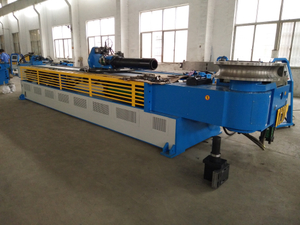
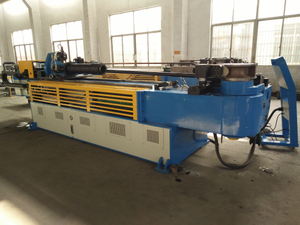
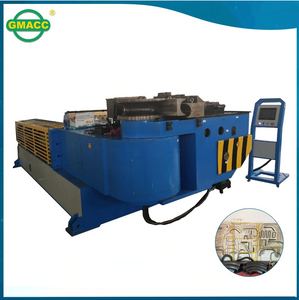
Precision is another critical factor. High-end pipe bending machines deliver tight tolerances, which are necessary for professional applications. You must look for machines that offer repeatability and accuracy in every bend. The GMACC Hydraulic Pipe Bending Machine uses computer controls and advanced sensors to achieve remarkable precision. Operators can input and store bending data using a touch screen interface, ensuring repeatability within ±0.1°. This level of precision reduces errors and guarantees that each pipe fits perfectly in your assembly.
Tolerance Type | Typical Range | Impact if Exceeded |
|---|---|---|
Bend Angle | ±0.5° to ±2° | Misalignment in assemblies |
Bend Radius | ±0.5 mm to ±2 mm | Poor fit and increased stress |
Wall Thickness | ±10% variation | Weak spots, risk of leaks or failures |
Ovality | Up to 8% of diameter | Reduced flow efficiency, poor fit |
Alignment/Twist | ±1 mm to ±3 mm | Assembly difficulties, stress on joints |
Tip: Always check the machine’s specifications for supported materials and precision tolerances. This step prevents costly mistakes and ensures your pipe bending machine meets your project requirements.
You must consider versatility when choosing a pipe bending machine. A versatile machine adapts to different applications and industries. It handles various pipe shapes and sizes, making it suitable for construction, petrochemical, food processing, and marine projects. In construction, you use the machine for architectural elements and piping systems. In petrochemical settings, you rely on it for high-pressure and chemical-resistant applications. Food processing requires easy cleaning and chemical resistance, while marine environments demand corrosion resistance.
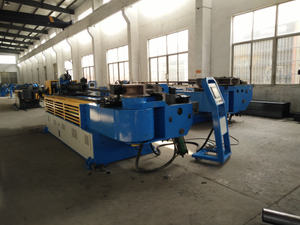
The GMACC Hydraulic Pipe Bending Machine stands out for its versatility. You can bend round, square, or rectangular pipes with ease. The machine offers multiple models, including electric, CNC, and manual options. This flexibility allows you to match the machine to your specific needs. You benefit from features like touch screen operation, automatic lubrication, and safety protection. These features simplify operation and reduce maintenance, making the machine user-friendly and efficient.
Touch screen and numerical control module for interactive operation
Components bending spring back compensation
Automatic lubrication for reduced maintenance
Safety protection features to enhance user safety
A versatile pipe bending machine increases your productivity and expands your business opportunities. You can take on a wider range of projects and respond quickly to changing demands. When you invest in a machine with advanced technology and user-friendly design, you improve your workflow and achieve superior results.
Note: Choose a pipe bending machine that offers both versatility and advanced features. This approach ensures you meet current needs and prepare for future growth.
Type of Tube Bender: Choose the right design for your application, such as rotary draw or mandrel benders.
Power: Select a machine with enough power to handle thicker metals, including manual, hydraulic, or electric options.
Capacity: Check the maximum material capacity to ensure the machine fits your requirements.
Accuracy: Look for machines with tight tolerances for bend radius and angle.
Supported Materials: Confirm the machine’s compatibility with the materials you use.
Choosing the right industrial pipe bending machine requires careful evaluation of compatibility, precision, and versatility. You maximize efficiency and avoid operational risks by matching machine features to your needs.
When you choose an industrial pipe bending machine, you must understand the main types available. Each type offers unique advantages for different applications, especially when working with stainless steel pipes. The right choice depends on your production needs, pipe diameter, and desired output quality.
Hydraulic pipe bending machines use hydraulic pressure to create powerful and precise bends. You can handle large diameter pipes and thick-walled steel with ease. These machines deliver consistent results, making them ideal for industrial bending machine applications. Many fabrication shops use hydraulic models for handrails, exhaust manifolds, and structural components. Maintenance is important because hydraulic systems require regular checks to prevent leaks.
Electric and CNC pipe bending machines offer automated operation and advanced control. Electric models use motors to bend pipes quickly and efficiently. CNC machines take automation further, using servo motors and computer programs to achieve the highest precision. You can store multiple bend programs and repeat complex shapes with accuracy as tight as ±0.1°. These machines often require stable power, such as 380V or 480V three-phase circuits, and may use up to 30 HP motors for large jobs. CNC models integrate with CAD/CAM software, making them perfect for high-volume production and intricate designs.
Machine Type | Operation Mode | Output Quality and Precision | Typical Applications |
|---|---|---|---|
Electric | Motor-driven, programmable | Moderate to high precision, fast cycles | Medium diameter pipes, complex bends |
CNC | Fully automated, servo-controlled | Highest precision (±0.1°–0.5°), repeatable | Aerospace, automotive, medical, high-volume |
Note: Electric and CNC machines suit you if you need speed, repeatability, and advanced features for your tube and profile bending machine operations.
Manual pipe bending machines rely on hand operation. You use these machines for small projects or occasional bends. They work best with small diameter pipes and thin walls. Output quality depends on your skill, and precision is lower than with automated machines. Manual models are economical and simple, but they do not suit high-volume or heavy-duty tasks.
Machine Type | Operation Mode | Output Quality | Typical Use Cases |
|---|---|---|---|
Manual | Hand-operated | Lower precision, skill-dependent | Small projects, light-duty, occasional use |
When you select a tube bending machine, consider your application, pipe diameter, and the level of automation you need. Each type of pipe bending machine serves a specific role in the industry, helping you achieve the right balance of cost, efficiency, and quality.
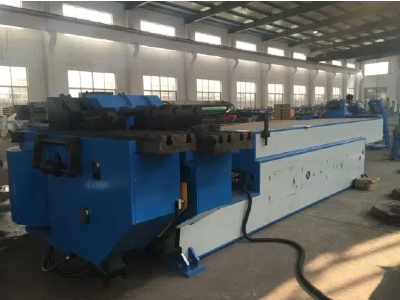
You must match your pipe bending machine to the size and wall thickness of the pipes you plan to bend. Industrial pipe bending machines handle a wide range of pipe diameters and wall thicknesses. For example, some machines can bend round tubing up to 10 inches in diameter and thick wall tubing up to 0.250 inches. Thin-wall applications require larger bend radii, usually four to five times the diameter, to prevent collapse. Thick-wall pipes allow for tighter bends but need careful control to avoid cracking.
Pipe Type | Max Diameter | Max Wall Thickness |
|---|---|---|
IPS Sch 80 | 8" | N/A |
Round Tubing | 10" | .165" |
Thick Wall Tubing | 10" | .250" |
Tip: Always check your machine’s specifications to ensure it can handle your required pipe dimensions. This step helps you avoid costly mistakes and ensures safe operation.
The bending radius capability of your pipe bending machine plays a key role in project success. A tighter bend radius can stretch the outside of the pipe and compress the inside, which increases the risk of fractures or deformation. You need to understand the optimal bend radius for your application to maintain the structural integrity of stainless steel. Machines with advanced controls, like those from GMACC, help you achieve precise bends and repeatable results. Accurate bending ensures that your finished product meets industry standards and fits perfectly in your assembly.
A larger bend radius reduces the risk of pipe collapse.
Tight radii require careful monitoring to prevent material failure.
Consistent accuracy leads to fewer reworks and higher productivity.
Stainless steel presents unique challenges due to its strength and work-hardening properties. You need a pipe bending machine with enough power to handle these demands. Stainless steel requires more powerful equipment than carbon steel. The yield strength of the material directly affects the power output needed for successful bending. Machines with precise control systems help you manage the higher tensile strength and work-hardening characteristics of stainless steel. This control ensures smooth bends and reduces the risk of cracking or deformation.
Note: Choose a machine with robust power and advanced controls if you work with hard materials like stainless steel. This choice improves your results and extends the life of your equipment.
You must prioritize safety when you operate an industrial pipe bending machine. International standards, such as ANSI B11.15, outline the requirements for pipe, tube, and shape bending machines. These standards help you protect operators and maintain a secure work environment. Machines with advanced safety features reduce risks and improve productivity. You should look for error diagnostics, automatic lubrication, and emergency stop controls. These features help you prevent accidents and minimize downtime.
Standard Code | Description |
|---|---|
ANSI B11.15 | Safety Requirements for Pipe, Tube and Shape Bending Machines |
Modern machines, like those from GMACC, include robust construction and stability. You benefit from automatic lubrication systems that keep moving parts safe from wear. Touch screen interfaces allow you to monitor safety alerts and respond quickly. Emergency stop buttons give you immediate control in hazardous situations. Safety guards and shields protect you from moving parts and pinch points. You must check that your machine meets international safety standards before you start any project.
Tip: Always inspect your machine’s safety features before each use. This habit helps you avoid injuries and ensures compliance with industry regulations.
Proper training is essential for safe operation. You need to develop both technical and artistic skills to perform tube bending accurately. Familiarity with different types of tube benders, including hand and benchtop models, helps you achieve precise results. Practical instruction through videos enhances your understanding and helps you avoid common defects. Training courses, from basic to advanced, equip you with the skills needed for safe and efficient tube bending.
You must possess the right skills for tube bending.
You should understand the operation of various tube benders.
Practical instruction through videos improves your technique.
Training courses provide essential and advanced skills.
You must follow all safety protocols and comply with regulations. Regular training keeps you updated on new safety procedures and machine features. When you invest in operator training, you reduce risks and improve the quality of your work. Safety remains the top priority in every step of the process.
You need to evaluate your production volume and usage frequency before you select a machine. Start by reviewing how many bends you perform each day. High-volume operations require a machine with greater capacity. If your process involves frequent bending cycles, you should choose a model that can handle continuous use without overheating or excessive wear. Machines like the GMACC Hydraulic Pipe Bending Machine offer robust construction for demanding environments.
Consider the types of projects you handle. If your process includes both small and large batches, flexibility becomes important. You want a machine that adapts to different workloads. A table can help you compare your needs:
Production Volume | Recommended Capacity | Machine Type |
|---|---|---|
Low | 1-50 bends/day | Manual/Electric |
Medium | 50-200 bends/day | Hydraulic/Electric |
High | 200+ bends/day | Hydraulic/CNC |
You should plan for future growth when you assess the right capacity. Your business may expand, and your process requirements may change. If you expect to take on larger projects or new materials, select a machine with extra capacity. This decision saves you from costly upgrades later.
Think about the types of pipe you may need to bend in the future. If your process might shift to thicker walls or larger diameters, choose a machine that accommodates these changes. Review the manufacturer’s specifications and ask about upgrade options. Machines with modular designs or software updates can adapt as your process evolves.
Review your current and projected process requirements.
Choose a machine with adjustable settings for different pipe sizes.
Ask suppliers about support for future process upgrades.
Planning ahead ensures your investment supports your process for years to come.
You need a pipe bender that simplifies operation and reduces manual labor. Modern machines offer features that make your work easier and more efficient. An intuitive touch screen lets you control settings quickly. You can store and recall multiple bending programs, which saves time when switching jobs. Micro encoders help you achieve precise bends, keeping angles accurate within ±0.1°. This level of precision is important for stainless steel projects.
The following table highlights features that contribute to ease of use and automation:
Feature | Description |
|---|---|
Precision and Accuracy | Micro encoders ensure bending angles stay accurate within ±0.1°, crucial for high-quality production. |
Intuitive Touch Screen | Simplifies operation, reducing the learning curve for new operators. |
Programmable Bending Systems | Allows for storage of 20 to 200 different bending programs, facilitating quick job changes. |
Flexibility in Production | Capable of handling various materials and complex bend configurations with minimal operator input. |
Cost-Effectiveness | Lower initial investment compared to CNC machines while reducing labor costs significantly. |
You benefit from automation because it reduces errors and boosts productivity. Machines like the GMACC Hydraulic Pipe Bending Machine combine advanced technology with user-friendly design. You can handle complex bends and different materials with minimal effort.
You must consider maintenance when selecting a pipe bender. Regular maintenance keeps your machine running smoothly and prevents unexpected breakdowns. Preventive maintenance is essential for avoiding costly repairs and downtime. You should follow the manufacturer's guidelines for lubrication, inspection, and cleaning.
Reliable support from your supplier makes a big difference. You need access to technical assistance and spare parts. GMACC offers automatic lubrication systems and error diagnostics, which simplify maintenance tasks. These features help you extend the life of your equipment and maintain high productivity.
Note: Schedule preventive maintenance checks and keep records of all service activities. This practice ensures your pipe bender stays in top condition and supports your business goals.
You must pay close attention to the material requirements when selecting an industrial pipe bending machine. Stainless steel pipes have unique properties that demand specific machine capabilities. If you ignore these needs, you risk poor bends, pipe deformation, or even machine damage. Always review the specifications for pipe diameter, wall thickness, and grade compatibility. These considerations help you avoid costly errors and ensure your equipment delivers consistent results. When you match the machine to your material, you protect your investment and maintain high-quality output.
Many buyers underestimate the importance of safety features and technical support. This mistake can lead to serious consequences in your workshop. Neglecting safety protocols exposes operators to injuries and causes unexpected downtime. You should always look for machines with built-in safety systems and clear emergency procedures. Operators must wear personal protective equipment, understand the machine’s functions, and keep the workspace organized. Reliable technical support ensures you resolve issues quickly and keep production running smoothly.
Neglecting safety protocols can lead to serious injuries and costly downtime.
Operators must adhere to established safety guidelines to maintain a secure working environment.
Key safety measures include wearing personal protective equipment, ensuring machine familiarization, maintaining workplace organization, and establishing emergency procedures.
Focusing only on price often leads to disappointing results. While it may seem wise to save money upfront, cheaper machines usually cost more in the long run. Low-cost pipe benders often produce inconsistent bends, which increases material waste and repair expenses. Investing in a quality machine ensures precision and reliability over time. High-quality machines also reduce the need for welded joints, which are common failure points in pipe systems.
Investing in quality machines ensures precision, which is crucial for maintaining long-term performance and reliability.
Cheaper machines often lead to inconsistent results, increasing material waste and operational costs due to frequent repairs.
Quality pipe benders eliminate costly welded joints, which are common failure points, thus enhancing structural integrity.
When you consider all factors—not just price—you make a smarter investment. These considerations help you achieve better performance, safety, and long-term value from your pipe bending machine.
When you purchase an industrial pipe bending machine for stainless steel pipes, focus on these priorities:
Automation and precision—smart technology and CNC controls help you manage costs and quality.
Ongoing training—maximize your investment with skilled operators.
Matching machine features to your application—understanding compatibility and maximum tube diameter ensures efficiency.
Use these purchase tips to avoid common mistakes and support making an informed decision. Navigating the buying process becomes easier when you test samples, verify supplier credentials, and confirm after-sales support.
Criteria | What to Check |
|---|---|
Purchase tips | Facility size, staff count, ISO compliance |
Making an informed decision | Bend accuracy, production timelines, support |
Understanding compatibility | Technical specs, customization, application fit |
You achieve the best results by making an informed decision and understanding compatibility at every stage of your purchase.
You should inspect hydraulic fluid levels, check for leaks, and clean moving parts regularly. Lubricate components as recommended. Follow the manufacturer's maintenance schedule to ensure optimal performance and extend machine life.
Most advanced machines, like GMACC models, support various pipe materials and sizes. Always verify the machine’s specifications for diameter and wall thickness compatibility before use.
Train operators thoroughly. Use all built-in safety features, such as emergency stops and guards. Require personal protective equipment. Regularly review safety protocols to maintain a secure work environment.