
Views: 0 Author: Site Editor Publish Time: 2025-02-07 Origin: Site


In the realm of metal fabrication, chromoly steel stands out as a material of choice for numerous industrial applications. Its unique combination of strength, durability, and weight makes it ideal for constructing aircraft parts, bicycle frames, racing car chassis, and more. However, working with chromoly, especially bending it into precise shapes, presents a set of challenges due to its high tensile strength and hardness. A common question that arises among fabricators and engineers is: Can a pipe bending machine bend chromoly effectively and safely? This article delves into this inquiry, exploring the properties of chromoly, the capabilities of modern pipe bending machines, and the techniques necessary to bend this robust material without compromising its integrity. Understanding the interplay between the material and the machinery is crucial for successful fabrication, and with the right knowledge and equipment, chromoly can indeed be bent to meet specific design requirements. For professionals seeking efficient solutions, modern bending machines offer advanced features that accommodate the complexities of chromoly bending.
Chromoly steel, an abbreviation for chromium-molybdenum steel, is a low alloy steel that combines chromium and molybdenum as alloying elements. It is designated under the AISI 41xx steel series, with 4130 and 4140 being the most common grades used in structural applications. The addition of chromium increases hardness, tensile strength, and corrosion resistance, while molybdenum enhances strength and weldability. This results in a steel that is strong yet relatively lightweight, making it preferable in industries where these characteristics are paramount. The microstructure of chromoly allows it to withstand high stress and strain without deformation, but these same properties pose challenges during fabrication processes such as bending.
Chromoly steel exhibits high tensile strength, typically around 97,000 psi (670 MPa), and a yield strength of approximately 63,100 psi (434 MPa). Its toughness allows it to absorb energy before fracturing, making it ideal for high-stress applications. However, its lower elongation percentage compared to mild steel (approximately 21% elongation at break for chromoly versus up to 36% for mild steel) indicates that chromoly is less ductile. This reduced ductility means it has a smaller plastic deformation range before permanent deformation occurs. The alloy's high strength and hardness can lead to increased wear on tooling and machinery during the bending process, necessitating the use of hardened tools and robust machines capable of handling the additional stress.
Bending chromoly involves overcoming its resistance to deformation while maintaining its structural integrity. One of the primary challenges is its tendency to spring back due to its elasticity, which requires compensation during the bending process. Springback can result in the final bend angle being less than intended, necessitating adjustments to achieve accurate angles. Moreover, chromoly's susceptibility to cracking under tensile stress during bending can lead to surface defects or complete material failure. The risk increases with tighter bend radii and larger tube diameters or wall thicknesses. Common defects encountered include ovality, where the cross-section of the tube becomes elliptical, and wall thinning on the outside radius of the bend. Wrinkling or buckling may also occur on the inside radius due to compressive stresses. Therefore, understanding the material's limits and employing appropriate bending techniques is essential.
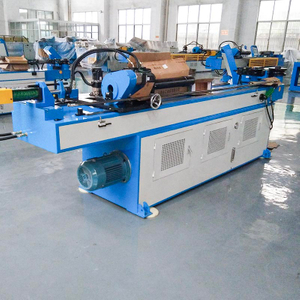
Pipe bending machines are mechanical devices designed to bend pipes and tubes to specific angles and shapes. They range from simple manual devices to complex CNC-controlled machinery. The primary types of bending processes employed include rotary draw bending, mandrel bending, compression bending, roll bending, and induction bending. Each method has its advantages and limitations when applied to different materials and geometries. For bending high-strength materials like chromoly, machines equipped with precise control and specialized tooling are preferred. Modern bending machines incorporate hydraulic or electric actuators, programmable controls, and real-time feedback systems to ensure accuracy and repeatability in the bending process.
Rotary draw bending is a common method used for precise bending of tubing with tight radii and critical specifications. It involves clamping the tube onto a rotating bend die while a pressure die pushes the material around the die's contour. For chromoly tubes, rotary draw bending with a mandrel insert helps support the interior of the tube, preventing collapse or wrinkling. The mandrel, usually made of hardened steel, provides internal support at the bend point, maintaining the tube's roundness and structural integrity. This technique is particularly effective for thin-walled tubes where deformation risks are higher.
Mandrel bending extends the capabilities of rotary draw bending by incorporating an internal support system. The mandrel, inserted into the tube, can be a simple plug or a multi-ball assembly, depending on the bend complexity and tube dimensions. This method is essential for bending chromoly tubes as it minimizes wall thinning and ovality, ensuring the tube's cross-sectional shape remains consistent throughout the bend. Mandrel bending requires precise machine settings and skilled operation to synchronize the mandrel's movement with the tube's advancement, preventing friction and potential defects.
Successfully bending chromoly tubes requires a combination of suitable equipment, proper tooling, and informed techniques. Key considerations include selecting the appropriate bending method, tooling design, machine settings, and material preparation. The following techniques are vital for achieving optimal results when using pipe bending machines for chromoly:
Choosing a bending machine equipped to handle the mechanical demands of chromoly is crucial. Machines with sufficient torque and power to overcome the material's strength are necessary. Hydraulic or electric CNC bending machines offer the precision and control required for chromoly bending. These machines can be programmed to account for springback and other material behaviors, ensuring that the final product matches the design specifications.
The design and material of the bending dies and mandrels significantly impact the bending process. Tooling must be robust enough to withstand the forces exerted during bending without deforming. High-quality alloy steels are typically used for tooling components. The die's radius should be appropriate for the tube diameter and desired bend radius. Additionally, lubrication between the tube and tooling reduces friction and prevents surface damage to the chromoly tube.
Preparing the chromoly tubes before bending enhances the material's formability. This may include annealing the tubes to relieve internal stresses and increase ductility. Annealing involves heating the material to a specific temperature, typically around 1,600°F (870°C) for chromoly, and then allowing it to cool slowly. This process reduces hardness and relieves internal stresses, making the steel more malleable. Heat treatment processes must be carefully controlled to prevent overheating, which can degrade the material properties. Cleanliness is also important; removing any surface contaminants prevents defects during bending.
Adjusting machine parameters such as bending speed, feed rate, and mandrel positioning is critical. Slower bending speeds reduce the risk of material failure by allowing the material to deform gradually. Precise control over the mandrel's movement ensures consistent support throughout the bend. CNC bending machines utilize computer-controlled movements to execute precise bends. These machines can store and repeat complex bending programs, ensuring consistency across multiple parts. Parameters such as bend angle, bend radius, and feed length are programmed into the system. Advanced sensors and feedback mechanisms allow the machine to adjust in real-time for material variations. For chromoly, CNC machines can compensate for springback by adjusting the bend angle based on pre-programmed calculations or empirical data gathered from test bends. Monitoring the bending process in real-time allows for immediate corrective actions if anomalies are detected.
Adhering to best practices and safety precautions is essential when bending chromoly to prevent accidents and ensure the quality of the finished product. Operators should be trained in the specific requirements of chromoly bending and familiar with the machinery and tooling used. The following guidelines are recommended:
Personal protective equipment (PPE) such as gloves, safety glasses, and protective clothing should be worn to protect against sharp edges and hot surfaces. Machines should be equipped with emergency stop functions and guards to prevent accidental contact with moving parts. Regular maintenance and inspection of the bending equipment reduce the risk of mechanical failures.
Implementing strict quality control measures ensures that each bend meets the required specifications. This includes dimensional inspections, surface finish evaluations, and structural integrity assessments. Non-destructive testing methods such as ultrasonic testing or radiography can detect internal defects that are not visible on the surface. Consistent documentation of the bending process parameters and outcomes aids in maintaining quality standards.
Proper handling and storage of chromoly tubes prevent damage before bending. Tubes should be stored in a dry environment to avoid corrosion and should be supported adequately to prevent sagging or bending under their own weight. Handling tools should be used to move tubes, minimizing manual handling that could introduce dents or scratches.
Practical applications of chromoly bending demonstrate the feasibility and methods used in real-world scenarios. For instance, in the automotive industry, roll cages made from chromoly tubing require precise bends to fit within vehicle cabins while maintaining structural integrity. Fabricators use advanced bending machines and mandrel bending techniques to achieve the necessary shapes. A prominent motorsport fabricator reported achieving consistent bends on chromoly tubes with wall thicknesses as low as 0.083 inches (2.1 mm). By implementing rotary draw bending with a multi-ball mandrel and integrating finite element analysis (FEA) to predict material behavior, they optimized the bending process, reducing instances of tube failure by 25%.
According to industry reports, the use of chromoly in aerospace applications has increased by approximately 15% over the past decade due to its favorable strength-to-weight ratio. In one case study, a manufacturer of aircraft landing gear components successfully implemented mandrel bending of chromoly tubes with diameters up to 3 inches. By utilizing a combination of induction heating and CNC-controlled bending machines, they achieved bend radii as tight as two times the tube diameter without compromising material properties. The process adjustments led to a reduction in manufacturing time by 20% and decreased material waste by 10%.
Similarly, bicycle manufacturers utilize chromoly for frames due to its superior strength-to-weight ratio. The bending of chromoly tubes for bicycle frames involves tight radii and complex geometries. Manufacturers have developed specialized processes that include controlled heating and custom tooling to bend the tubes without inducing cracks or altering the material's mechanical properties. These innovations have contributed to producing lighter, stronger, and more efficient bicycles for both competitive and recreational use.
Bending chromoly steel tubes is a challenging but achievable task when equipped with the right knowledge, machinery, and techniques. Pipe bending machines, particularly those designed with advanced features, are capable of handling the demands of chromoly bending. Key factors such as selecting appropriate bending methods, utilizing proper tooling, and adhering to best practices significantly influence the success of the process. The ability to bend chromoly expands its utility across various industries, enabling the creation of complex structures that benefit from its strength and durability. By understanding the intricacies involved and implementing careful control over the bending process, fabricators can effectively bend chromoly tubes to meet their specific application needs. Looking ahead, advancements in bending machines and material science continue to enhance the capabilities in this field, making it more accessible and efficient to work with high-strength materials like chromoly. These developments promise greater efficiency, accuracy, and the ability to tackle even more challenging bending applications, solidifying chromoly's role in future engineering and manufacturing endeavors.