


Views: 0 Author: Site Editor Publish Time: 2025-01-18 Origin: Site


When it comes to large pipe bending, the importance of accurate calculations cannot be overstated. These calculations are not merely a technical requirement; they are essential to ensure the structural integrity, safety, and longevity of the entire pipeline system. Incorrect bending calculations can lead to various issues, from inefficiencies and safety hazards to the need for costly repairs and even system failures. Whether you're working on industrial infrastructure, construction projects, or manufacturing systems, getting the bending process right is critical to success.
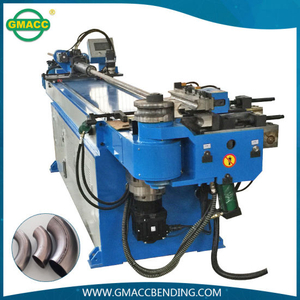
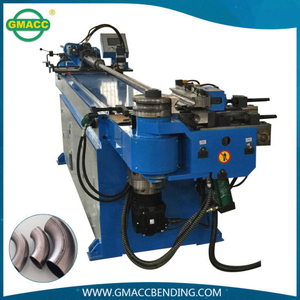
In this blog post, we will guide you through the key aspects of large pipe bending calculations, including the essential factors to consider. We will also introduce you to the GM-SB-168NCB Bending Machine—an advanced solution designed to streamline and enhance the accuracy of the bending process. This state-of-the-art machine integrates high-precision hydraulic technology and an intuitive touchscreen interface, making it easier to calculate and control bend parameters, ensuring efficiency and reducing human error in large-scale pipe bending applications.
When it comes to any pipe bending operation, precise calculations are essential to achieving the desired bend shape—whether it's a curve, angle, or a complete turn in the pipeline layout. Incorrect bending can result in inefficiencies, compromise the structural integrity of the entire system, and even cause damage to both the pipe itself and the surrounding infrastructure.
In the context of large pipes, the stakes are even higher. These pipes often form the backbone of essential industrial systems, including oil and gas pipelines, water transportation systems, and HVAC systems in large commercial or residential buildings. Ensuring the correct bend radius, angle, and pipe alignment is crucial for the operational success of these systems.
This article will cover the fundamental factors to consider when calculating large pipe bending and explore how the GM-SB-168NCB Bending Machine can simplify and enhance the process. Whether you're new to pipe bending or an experienced professional, understanding the right approach to these calculations will improve your overall efficiency, minimize errors, and help you deliver high-quality results.
Pipe bending is a highly specialized process that involves shaping a pipe into a specific angle or curve to fit a particular system design. It requires careful consideration of several factors, including the pipe’s diameter, material properties, wall thickness, and bend radius. Bending large pipes is especially challenging due to their size and thickness.
The primary objective of pipe bending is to apply just the right amount of force to ensure the pipe bends without overstressing the material. Over-stressing the pipe could lead to deformation, cracking, or even complete failure. For larger pipes, calculating the necessary force is even more critical, as it is influenced by the pipe’s material, thickness, and overall size.
The GM-SB-168NCB Bending Machine significantly simplifies this complex process. It is equipped with a user-friendly touchscreen interface, allowing operators to easily input key bending parameters, such as bend radius and angle. This intuitive system eliminates the guesswork that typically accompanies manual pipe bending, ensuring greater accuracy and minimizing the margin of error.
Several key variables play a significant role in the calculation of pipe bending. Let’s break down each one to understand their impact:
Pipe Diameter:
The diameter of the pipe directly affects the bend radius. Larger pipes require more force to bend and typically have a larger minimum bend radius. Smaller pipes, on the other hand, bend more easily. Accurate calculations must take pipe diameter into account to avoid damaging the pipe.
Material Properties:
The type of material used for the pipe—whether steel, aluminum, copper, or another alloy—affects how much force is required for bending. Each material has unique characteristics, such as flexibility, tensile strength, and resistance to deformation. For example, stainless steel requires more force to bend compared to copper due to its higher strength and stiffness.
Pipe Thickness:
Thicker pipes require greater force to bend and often have a larger minimum bend radius. Additionally, the wall thickness directly influences the pipe’s ability to maintain structural integrity after being bent. If the thickness is not considered when calculating the bend radius, the pipe may undergo excessive stress, potentially leading to cracks or permanent deformation.
The GM-SB-168NCB Bending Machine is expertly designed to handle these variables with ease. Featuring a high-precision hydraulic system and top-quality components from Taiwan, the machine ensures that all factors—such as diameter, material properties, and pipe thickness—are accurately measured and applied during the bending process.
The bend radius is one of the most critical aspects of pipe bending. It determines the minimum radius at which a pipe can be bent without causing permanent damage, such as cracks or kinks. If the bend radius is too small, the pipe’s material may experience strain and fail.
For large pipes, it's especially important to use precise values for the material constant and pipe diameter to prevent bending beyond the pipe’s capacity. Using a more sophisticated bending machine, like the GM-SB-168NCB, ensures that the correct bend radius is maintained throughout the process. Its advanced hydraulic technology guarantees that the pipe bends smoothly and accurately, preserving the structural integrity of the pipe at all times.
The bending angle is another crucial factor to calculate, especially when working with large pipes that need to fit specific system designs. The bending angle refers to the degree to which the pipe is bent (for example, a 90-degree bend is quite common in many pipeline systems). If the angle is incorrect, it can result in misalignments in the overall system layout.
Traditional manual methods for calculating the bending angle can be tedious and prone to human error. The GM-SB-168NCB Bending Machine simplifies this process with its intuitive touchscreen interface, where operators can directly input the desired bending angle. The machine then uses real-time data to adjust its settings and replicate the angle with high precision.
For large and complex pipe bending projects, relying solely on manual calculations can lead to inaccuracies. To avoid this, many modern pipe bending operations use software tools and automated systems to assist with the calculations. These tools can calculate bending parameters more quickly and accurately than manual methods, ensuring consistent and high-quality results every time.
The GM-SB-168NCB Bending Machine integrates seamlessly with modern software and features a programmable logic controller (PLC) that allows precise inputs for bending calculations. The system automatically adjusts to ensure optimal bending parameters in real-time. This makes the machine adaptable to a wide range of pipe materials, including steel, aluminum, and other alloys.
In conclusion, accurate pipe bending calculations are essential for ensuring the safety, functionality, and efficiency of any pipeline project, especially when dealing with large pipes. By considering variables such as pipe diameter, material properties, thickness, bend radius, and bending angle, you can ensure that your projects meet safety standards and are completed efficiently.
The GM-SB-168NCB Bending Machine simplifies the entire pipe bending process, ensuring that the required bend radius and angles are achieved with ease. With its intuitive touchscreen interface, high-precision hydraulic system, and advanced PLC system, the GM-SB-168NCB is an indispensable tool for any business looking to improve the accuracy, efficiency, and consistency of their pipe bending operations.
Investing in state-of-the-art technology like the GM-SB-168NCB Bending Machine not only streamlines your bending process but also guarantees that your projects are completed with precision, meeting the highest standards of quality. Whether you are working on large-scale industrial projects or smaller applications, this machine offers the flexibility and reliability needed to succeed.
For more information about how the GM-SB-168NCB Bending Machine can improve your pipe bending processes, contact us today. Let’s bend the future with precision!