

Views: 0 Author: Site Editor Publish Time: 2026-07-05 Origin: Site


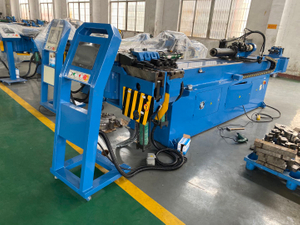
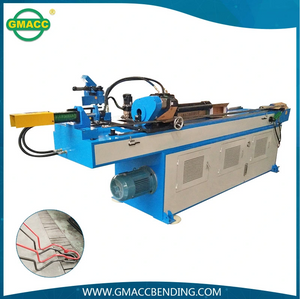
You can find many kinds of pipe bending machines today, including those from reputable pipe bending machine manufacturers. These machines come in various types such as manual, hydraulic, electric, pneumatic, and special models. Each type is suitable for different jobs. Manual machines are best for easy work, while hydraulic and electric machines handle bigger or harder tasks. Pneumatic machines utilize air pressure and are cost-effective for small pipes. Special machines provide very precise results for challenging projects. The world market for these machines is growing rapidly:
Valued at USD 0.56 Billion in 2026
Expected to reach USD 0.94 Billion by 2035
CAGR of about 5.9% from 2026 to 2035
Understanding the differences among these options helps you choose the right machine, which in turn contributes to the development of better pipe bending machines.
Learn about the types of pipe bending machines. These include manual, hydraulic, electric, pneumatic, and special models. Each type does a different job and helps with certain tasks.
Pick rotary draw bending machines for exact and even bends. These are used in places like airplane and car factories. They give very good results.
Use hydraulic pipe benders for thick pipes and big jobs. They have strong bending power and are easy to use. This makes them great for tough work.
Electric and CNC pipe benders are fast and accurate. They are good for making many pipes quickly. These machines do the work by themselves, so you save time and effort.
Think about what your project needs. Look at your budget, the kind of material, and how exact you need to be. This will help you pick the best pipe bending machine for your job.
Pipe bending machines use different ways to bend pipes and tubes. Each way gives a special result. If you know about these tube bending methods, you can pick the best machine for your work. Some machines are good for sharp bends. Others are better for big curves or easy shapes. When you learn about these methods, you can choose the right tool for your needs.
Rotary draw bending machines pull the tube around a set shape using a die. Mandrel bending puts a rod inside the tube for support. This rod stops the tube from folding or wrinkling. Rotary draw bending machines are used in jobs that need very exact bends. You see them in aerospace, automotive, and medical device factories. These machines make smooth bends and keep the tube strong, even if the walls are thin.
Tip: Pick a rotary draw bending machine if you want tight bends, the same bend every time, or a smooth finish.
Here is a table that shows how rotary draw bending compares to other machines:
Feature | Rotary Draw Bending | Compression Bending | Roll Bending | Ram Bending |
|---|---|---|---|---|
Precision | ★★★★★ | ★★ | ★★★ | ★★ |
Repeatability | High | Medium | Medium | Low |
Tight Radii Capability | Yes | No | No | Limited |
Thin-Wall Capability | Excellent | Poor | Fair | Poor |
Surface Finish Quality | Excellent | Fair | Good | Poor |
Tooling Cost | Higher | Lower | Medium | Low |
Best Use Cases | Aerospace, auto, medical | Handrails, conduit | Structural frames | Basic bends |
Rotary draw bending machines are used for:
Car exhausts
Roll cages
HVAC pipes
Fluid lines
Airplane parts
Medical tools
Oil and gas pipes
Ram bending uses a hydraulic die to push the tube into shape. Compression bending squeezes the tube around a mold. Press bending pushes the tube between two points. These machines are good for simple bends and fast jobs. They do not make bends as exact as rotary draw bending machines. You might see the tube flatten or change shape, especially if the walls are thin.
Bending Method | Process Description | Output Quality Considerations |
|---|---|---|
Ram Bending | Center die pressed into tube with pivoting shoes | More deformation, good for exhausts, not structural |
Press Bending | Center form pushed into tube at two points | Most deformation, not for load-bearing tubes |
Draw Bending | Mandrel and wiper tooling for material control | High-quality bends, best for structural use |
You use these machines for handrails, conduit, and building jobs that are not too important.
Roll bending machines use three rollers to make the tube curve into big arcs or spirals. This method is best for making wide, smooth curves. You can use roll bending for steel, aluminum, copper, and more. These machines can bend both thin and thick tubes, depending on the rollers. Roll bending does not work well for sharp bends or corners.
Pros: Good for big bends, needs little extra equipment, works with many shapes, CNC models make bends the same every time.
Cons: Not for sharp bends, may take practice, manual machines need skill.
Roll bending machines are used for:
Curved balcony rails
Entry arches
HVAC duct rings
Car frames
When you know what each tube bending method can and cannot do, you can pick the best pipe bending machines for your project. This helps you get the results you want, whether you need easy bends or very exact parts.
Manual pipe benders let you bend pipes without using power. You use your own strength to shape the pipe. These tools are best for small jobs or places with no electricity. You can make careful bends in pipes that are not very thick. Many people like manual pipe benders because they are light and easy to move. You only need a flat spot and the right die for your pipe.
To use a manual pipe bender, put the pipe in the tool and pull or push the handle.
You can see how much you bend the pipe by looking at the marks on the tool.
If you use the tool the right way, you will not get kinks or flat spots in the pipe.
Manual bending machines are great for learning how to bend pipes.
You should know the good and bad sides before you pick manual pipe benders. The table below shows how they are different from powered pipe bending machines:
Feature | Manual Pipe Benders | Powered Pipe Benders |
|---|---|---|
Cost | Generally cheaper and more affordable | More expensive due to machinery and power |
Power Source | No electricity or hydraulics needed | Requires electricity or hydraulic power |
Ease of Use | Simple to use with physical strength | Often easier to use with automated features |
Maintenance | Easy to maintain | May require more maintenance and repairs |
Precision | May not create precise or consistent bends | Can create precise and consistent bends |
Suitable For | DIY and occasional use | Professional and frequent use |
Tip: Pick manual pipe benders if you want a cheap tool for small jobs or if you work where there is no power.
Manual pipe benders are used in many jobs. People use them for custom work or making new things. You can bend pipes for gas pumps, fixing cars, and building equipment. These tools also help make parts for elevators, barber chairs, and office chairs. In building work, you can use manual pipe benders to make frames and other parts. They are good for air ducts, water pipes, and supports. Many people in car repair, building, custom work, and boat jobs use manual pipe benders every day.
Manual pipe benders are still a top choice for people who want simple and dependable pipe bending machines.
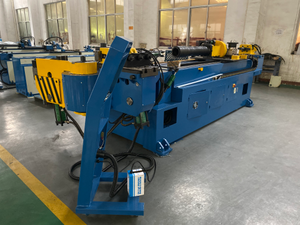
Hydraulic pipe benders use strong hydraulic power to bend pipes. You move the bending arm with a hydraulic cylinder. The machine uses oil and an electric motor to make steady pressure. This helps the machine work smoothly and evenly. Solenoid valves let you control how fast the pipe bends. Many machines have a touch screen that is easy to use. You can set the bend angle and watch the process on the screen. These machines are good for simple bends and need only basic care.
Here is a table that shows the main features and how they work:
Feature/Mechanism | Description |
|---|---|
Control System | Bending arm operated by hydraulic cylinder; speed managed by solenoid valves |
User Interface | Touch screen for easy control and data input |
Hydraulic System | Uses hydraulic oil and electric motor for stable pressure |
Maintenance | Simple upkeep; regular oil changes needed |
Bending Capabilities | Good for basic bends; not as precise as CNC |
Note: Hydraulic pipe benders use proven technology. They respond quickly and do not break often. You must check the oil and watch for heat.
Hydraulic pipe benders have many good points, but also some limits. The table below shows the main pros and cons:
Pros | Cons |
|---|---|
High bending force—great for thick-wall materials | Slower than CNC for high-volume production |
Lower operator fatigue compared to manual benders | Limited automation—needs skilled operator |
Can bend large diameter pipes (up to 3” or more) | Needs space and regular hydraulic maintenance |
Works with tooling upgrades (mandrels, pressure dies) | Not for multi-plane or variable-radius bending |
Tip: Pick hydraulic pipe benders if you need to bend thick or big pipes and want a machine that is simple to use.
Hydraulic pipe benders are used in many industries. These machines help shape pipes for big jobs and special equipment. Here are some common uses:
Shipbuilding and repairs in the maritime industry
Building frameworks and structures in construction
Making pipelines for natural gas and oil
Creating parts for mining and agriculture
Manufacturing medical beds, wheelchairs, and equipment
Producing frames and parts for aerospace
Bending motorcycle, bicycle, and public transport parts
Making staircase rails, scaffolding, and street signs
Hydraulic pipe benders are a top choice when you need strong, reliable, and flexible pipe bending machines.

Electric pipe benders bend pipes quickly and accurately. They use electric motors to move the bending arm. You do not need to push hard. These machines finish tricky bends in just a few seconds. Every bend looks the same. You can set the angle and let the machine do the work. Many electric pipe benders have touch screens. You can control them easily. You can save your bending programs and use them again. These machines use less energy than hydraulic ones. Workshops use them when they need speed and accuracy.
Feature | Electric Pipe Benders | Power Pipe Benders |
|---|---|---|
Speed | Complete complex bends in seconds | Slower, often takes minutes |
Accuracy | Achieve consistent bend angles (±0.05°) | Varies, generally less precise |
Automation | Highly automated with electric motors | Less automation, more manual intervention |
Labor Efficiency | Reduces manual labor time by up to 60% | Higher labor requirements |
Energy Efficiency | Typically consumes less power than hydraulic systems | Varies, often higher consumption |
Tip: Pick electric pipe benders if you want to save time and get perfect bends for every project.
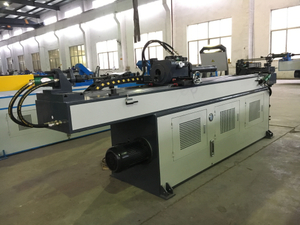
CNC pipe benders use computers to make very exact bends. These machines have three servo motors. One feeds the pipe, one rotates it, and one bends it. You can program the machine to make many bends in one pipe. CNC tube bending lets you make complicated shapes with tight rules. Some advanced machines are cnc vector tube bender and orbital cnc tube bender. You can use a touch screen to enter data and save your programs. CNC systems have safety features like emergency stops and alarms. They also have automatic oiling and cooling for long use.
Feature | Description |
|---|---|
CNC automation | Fully automatic pipe bending with 3 servo motor programmable axes (feeding, rotation, bending). |
High precision | Hydraulic bending with encoder feedback and servo motor reducer drive. |
Advanced control system | Standard imported hydraulic system and PLC; optional IPC upgrade. |
Smart operation | Touch-screen with HMI interface for easy data input and program storage. |
Reliable performance | Automatic lubrication, electric cabinet cooling, and hydraulic cooling ensure stable long-time operation. |
Safety system | Foot-switch supports auto start, emergency stop, and resume functions. |
Error management | Real-time self-diagnosis and alarm messages enhance reliability. |
Versatile tooling | Interchangeable bending molds meet various bending requirements. |
CNC tube bending gives you very exact bends every time. You can get tight tolerances like ±0.1 mm and ±0.05° on bend angles. CNC systems help you waste less material and keep workers safe. You can change projects fast and bend different shapes without changing tools.
Pneumatic pipe benders use air pressure to bend pipes. You can use these machines for small and medium pipes. Pneumatic pipe benders work quickly and use less energy. You only need an air compressor to run them. These machines are easy to use and need little care. Pneumatic pipe benders are best for jobs that need lots of bends in a short time. Factories use them to make furniture, racks, and light frames.
You should know the main good and bad points of electric pipe benders, cnc systems, and pneumatic pipe benders. The table below helps you compare them:
Machine Type | Pros | Cons |
|---|---|---|
CNC Tube Bender | Exceptional precision and repeatability, Fully automatic, Multiple bends | Expensive |
Electric Pipe Bender | Fast, accurate, energy efficient, easy to use | Higher cost than manual, needs power |
Pneumatic Pipe Bender | Precision pipe bending, Reduced energy consumption, High production efficiency | Only suitable for small machines, Requires compressed air |
Note: CNC systems and electric pipe benders give you high accuracy and speed. Pneumatic pipe benders are best for small jobs and save energy.
Electric pipe benders, cnc systems, and pneumatic pipe benders are used in many industries:
Car factories use electric pipe benders and cnc systems for frames and exhausts.
Commercial vehicles need computer-controlled pipe benders for hydraulic and structural tubing.
Shipbuilders use cnc systems for tight spaces and exact bends.
Architects use electric pipe benders for custom designs and tricky shapes.
Factories use cnc systems and pneumatic pipe benders for making equipment and energy systems.
CNC tube bending helps you make tricky curves and many radii in one cycle. You can switch projects fast and keep high quality. Modern pipe bending machines use new technology from around the world. You can find machines with touch screens, automatic error checks, and memory storage. These features make your work easier and more reliable.
Induction pipe benders are used for thick or strong pipes. These machines heat a small part of the pipe with an induction coil. The coil makes an electromagnetic field that heats the pipe fast. When the pipe is hot, it gets soft and bends easily. A mechanical arm bends the pipe to the angle you want. After bending, the machine cools the pipe right away. This keeps the shape and stops the pipe from warping. This way, the pipe stays strong and smooth, even with hard materials like carbon steel, stainless steel, or nickel alloys. Induction pipe benders are important in pipe bending machine manufacture. They help make exact bends for oil, gas, and power projects.
Automated rotary draw benders use computers to make very exact bends. You can program these machines to do the same bend again and again. This saves time and helps you make fewer mistakes. The CNC system checks each step, so you get the right angle and shape every time. These machines help you spend less money by using less material and less work. You can use automated rotary draw benders for tricky shapes, thin pipes, or jobs that need perfect bends. In pipe bending machine manufacture, these machines help you meet strict rules for aerospace and car factories.
Tip: Automated rotary draw benders help you finish lots of pipes fast and with the same good quality.
Specialized pipe bending machines help many industries that need special shapes and strong pipes. You see these machines in aerospace, car making, medical, oil and gas, and building work. They help make safe parts for planes, cars, and buildings. You can also use them to make tricky pipe runs in small spaces, like on oil rigs or inside ships. In healthcare, you need special bends for surgery tools and test machines. Pipe bending machine manufacture uses these advanced machines to build conveyor systems, robot arms, and marine hydraulic systems.
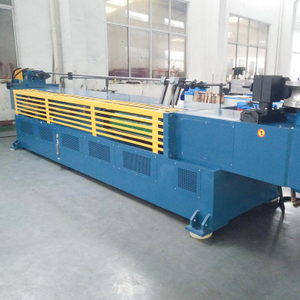
GMACC is a leader in pipe bending machine manufacture. They work with Italian partners to bring you new technology. Their machines use VDU touch screens and advanced CNC controls. This makes your work easier and more exact. GMACC has many types of special machines, so you can find what you need for any job. These features show how new pipe bending machines keep getting better to help you.
This table helps you compare the main types of pipe bending machines. It shows what each machine does, the good and bad points, and the best jobs for each one. You can use it to see which machine is right for your project.
Type of Pipe Bending Machine | Features | Advantages | Disadvantages | Best Uses |
|---|---|---|---|---|
Rotary Draw Bending | Holds the tube and bends it around a die with the same radius | Makes very accurate bends, works fast, gives top precision | Costs a lot, needs special tools for each job | Roll cages, furniture frames, handrails |
Compression Bending | Holds the pipe at both ends and pushes at the bend spot | Fast and easy to set up | Pipe might break, not good for tight bends | Electrical conduits in construction |
Roll Bending | Uses rollers to move the pipe through a coil | Can bend many sizes, makes bends in different planes | Slow, takes practice to get right | Coils of pipes, truss rod bends |
Mandrel Tube Bending | Puts support inside the tube to stop it from collapsing | More accurate, keeps tube safe, can repeat bends | Takes longer to set up, costs more | Exhaust pipes, aerospace, exercise equipment |
Heat Induction Bending | Heats the tube with coils to make it soft | Needs less force, works well for thick tubes | Can hurt the tube, may leave marks or change shape after cooling | Pipelines in petrochemical, construction, power |
Sand Packing and Hot Slab Forming | Fills the pipe with sand, heats it, bends it on a slab | Keeps the tube from changing shape, good for thick tubes | Takes a long time, heat can stress the tube | High wall thickness tubes |
Ram Bending | Uses counter dies and a pressure die to bend | Simple, cheap, and quick | Tube can collapse, not very exact | Projects that do not need perfect bends |
Tip: Pick rotary draw or mandrel tube bending machines if you want the most accurate bends.
Think about some important things before you choose a pipe bending machine. These things help you find the best machine for your job and material.
Budget: Decide how much money you can spend. Fancy machines cost more but have better features.
Precision: Pick machines that make the most accurate bends for jobs like roll cages or airplane parts.
Material Type: Check what kind of pipes you will bend. Some machines work better with steel, others with softer metals.
Workable Size: Make sure the machine can bend the size and thickness of your pipes.
Bend Angle: Choose a machine that can make the angles you need. Rotary draw bending is good for big angles.
Production Volume: Think about how many pipes you need to bend. If you have lots, pick a machine that can do the same bend over and over.
Total Cost of Ownership: Look at the price of the machine, tools, fixing, and upgrades.
Vendor Support: Buy from a company that gives good help and service.
Note: The kind of material and how thick it is changes how much force you need. Softer pipes may work with electric machines. Thick pipes may need hybrid or hydraulic machines.
You can pick the right pipe bending machine by thinking about your job and material. Here are some tips:
Know what you need to make. If you want the same bend every time, pick a machine that is very accurate and can repeat bends.
If you use different materials or pipes with different thickness, hybrid tube bending machines are a good choice.
Manual machines are best for small jobs or custom work. They let you change things easily.
Electric and CNC machines are fast and accurate. They are good for big jobs and when you need perfect bends.
If you bend thick pipes or need special shapes, use induction or sand packing machines.
Match the machine’s power and controls to your pipe. This helps you get strong and even bends.
Tip: If you have lots of pipes to bend, you need a machine that is fast and can do the same thing again and again. If you only have a few, pick a machine that is easy to change for new jobs.
Some pipe bending machines have touch screens, memory, and automatic error checks. These features help you work faster and safer. Companies like GMACC use their own technology and Italian ideas. Their machines can bend pipes all by themselves, fix spring-back, and keep you safe. You can use these machines for steel, metal, and other pipes. This helps you get the best results for your pipe bending work.
You now know about the main kinds of pipe bending machines. Each machine is good for a special job. Manual machines work well for small projects. CNC systems are best for big jobs that need many bends. When picking a machine, think about what pipes you will use. Also, think about how hard the bends are and how many pipes you need to bend. Safety features are important too.

Always look for good help, extra parts, and training. If you are not sure, ask people who make these machines. They can help you choose the right one and stop you from making mistakes.
Manual machines need you to use your own strength. You must also know how to bend pipes well. CNC machines use computers to bend pipes by themselves. They make every bend the same way each time. Manual machines are good for small jobs. CNC machines are better for making lots of pipes fast.
Yes, you can bend steel pipes with electric pipe benders. These machines use motors to bend pipes quickly and neatly. You do not have to work as hard. Electric pipe benders can also bend copper and aluminum pipes.
Tip: Look at what your pipe is made of, its size, and how much you want to bend it. Think about if you need a manual, hydraulic, or CNC machine. Check how much money you can spend and how many pipes you need to bend. You can ask the company for help.
You should look for emergency stop buttons and covers that keep you safe. Good machines also have alarms and automatic oiling. Some machines, like GMACC’s, have touch screens and extra safety parts. These things help stop accidents and keep you safe.
Many new machines, like GMACC’s VDU touch screen models, let you type in, save, and show bending steps. You can keep your programs for jobs you do again. This helps you work faster and makes your bends the same every time.