


Views: 0 Author: Site Editor Publish Time: 2026-08-20 Origin: Site


A manual pipe bender shapes tough metal tubes using simple mechanical force. You mount a round forming die onto a thick base plate. Then, you pull a lever arm to push a roller against your metal pipe. This action creates strong leverage and smoothly bends the metal without crushing it.
You can build your own custom pipe bending machine with basic metalworking tools. First, gather your steel stock. Next, drill precise holes to build sturdy support plates. After that, put together your lever assembly. Finally, try test bends to check your results. You now know how to make a simple manual exhaust pipe bender for your shop.
Collect thick Q235 steel plates and strong bolts to construct a long-lasting machine frame.
Drill exact holes in the base plates to line up rollers and keep smooth parts from scratching metal.
Bend leftover metal pieces first to test the normal springback and stop the pipe from crushing.
Oil all the main bolts often to keep your hand-operated pipe bender safe from rust and damage.
Building a pipe bender safely in your shop requires proper metalworking equipment. Put on side-shield safety glasses and strong, cut-resistant gloves before cutting any steel. Wear fire-resistant coveralls and steel-toed boots to protect your body from sharp metal edges. Always use a welding mask with the right shade level when fusing steel pieces.
Required tool | Supporting operation |
|---|---|
Drill and 14mm bit | Drills holes for 127mm and 85mm rollers |
Drill and 1/2-inch bit | Drills holes for the 65mm pressure roller bolt |
14mm tap set | Cuts internal threads into the base plate |
Angle grinder | Cuts base plates and grooves 1.5-inch angle iron |
Wrenches | Tightens locknuts, handle bolts, and assembly parts |
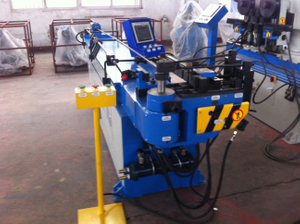
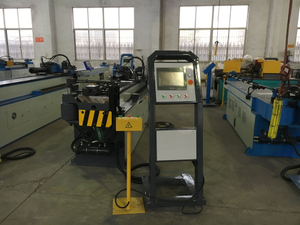
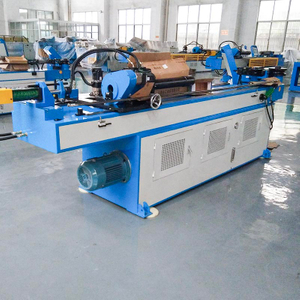
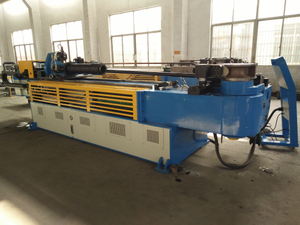
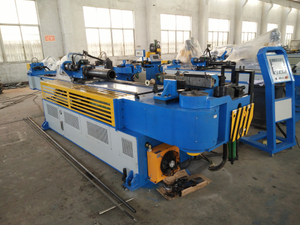
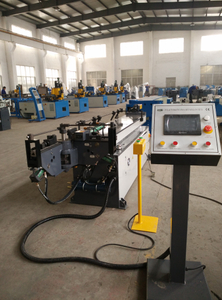
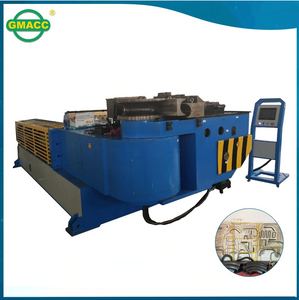
Basic hand tools work fine for small projects at home. However, commercial factories usually upgrade to GMACC Machinery's specialized range of pipe tube bending machines. These industrial setups apply modern European design standards to deliver ultimate accuracy and rapid manufacturing speeds.
Your machine needs heavy steel components to withstand high pressure. You must slice steel plates to 1.5 inches wide, 10.5 inches long, and 5mm thick. Q235 hot-rolled mild steel works great because it has a yield strength ≥235 MPa and tensile strength of 375–500 MPa. This strong metal stops your basic diy exhaust pipe bender components from twisting under tough stress.
You also require structural angle iron and sturdy square tubing to build the handle. Collect 14mm mounting bolts, a 127mm center die component, and an 85mm forming roller. A heavy metal weight plate can even serve as a cheap center die. This design forms a dependable diy round pipe bending machine for minor tasks. Now, take your steel parts and construct your custom diy exhaust pipe bender.
Now you are ready to construct the main frame of your custom tool. You must build a tough framework to withstand high physical stress during operations. Take your cut steel pieces and prepare your workspace for drilling and assembly.
Start by taking your two cut steel plates. Remember, these Q235 steel plates measure 1.5 inches wide, 10.5 inches long, and 5mm thick. You need exact hole placement so your bolts slide through without binding.
Lay your first 5mm thick plate flat on your worktable and clean off all metal dust.
Measure your hole locations carefully using a steel ruler and mark each spot with a center punch.
Clamp the plate securely into your drill press vise to prevent any slipping.
Drill your primary mounting holes using a sharp 14mm drill bit.
Drill the secondary adjustment hole using a 1/2-inch drill bit for your 65mm pressure roller bolt.
Mirror these exact marks onto the second plate so both pieces match perfectly.
Double-check your alignment after drilling both support plates. Use your 14mm tap set to cut clean internal threads directly into the base plate holes. Smooth threads let your 14mm mounting bolts turn easily without stripping. Clean away all metal shavings from the fresh holes before moving forward.

Next, you will assemble the core pivot point and the leverage handle. Place your 127mm center die component onto the base plate over the main 14mm hole. Slide a heavy-duty 14mm bolt through the center die to lock it to your support plates. This main pivot bears most of the mechanical force when you bend steel.
Mount your 85mm forming roller and your 65mm pressure roller onto your lever arm. You can bolt or weld these roller pins securely onto your square tubing handle assembly. Ensure your rollers spin smoothly on their bolts. If rollers bind against the frame, your tool will scrape your metal tubing instead of shaping it smoothly. Proper clearance keeps your movement fluid under heavy manual leverage.
Now, attach your pipe retainer to the base plate using a sturdy section of 1.5-inch angle iron. Weld this angle iron piece right next to your 127mm center die. The angle iron acts as a tough lock block. It holds your metal tubing firmly against the die so the pipe cannot slip away while you pull the handle.
Secure clamping prevents dangerous movement and keeps your bends completely straight.
You have now built a strong frame for your diy exhaust pipe bender. Aligning your rollers correctly turns your basic setup into a reliable diy round pipe bending machine. Take your time during final bolt tightening. Check that every pivot turns freely before you apply full pressure. You now possess a solid pipe bender that handles tough shop tasks safely. This completed pipe bending machine will serve your workshop for many years.
You must test your new pipe bending machine before you tackle any major shop projects. Always practice on a piece of scrap tubing that matches your final pipe diameter and material. Mark your setback distance on the metal surface using a chalk pen. Verify that your bend die has the required centerline radius for your specific project. Align your mark with the indicator on your tool. Seat the tube level inside the bending arm.
Bend your scrap tube slowly to 92–93° for a 90° target to compensate for natural springback.
Measure the released angle with an angle finder, combination square, or magnetic digital level.
Fine-tune your bender if needed, but avoid bending past 95° to prevent tube flattening.
Compare your actual 90° and 45° bend results with theoretical values before final validation.
Thorough surface preparation protects your welded steel frame from harsh workshop environments. Clean away all welding slag, spatter, oil, grease, rust, and dust following the ISO 8501-1 reference standard. Apply primer before your final protective topcoat. Spraying a zinc-rich primer with 95% zinc in the dried film provides sacrificial corrosion protection. Scratches expose fresh zinc, which instantly protects your structural steel frame through renewing galvanic action.
You can also apply Rust Grip polyurethane directly over pressure-washed steel. This single-part coating absorbs atmospheric moisture to cure completely. It fills small pits and pores while offering a extremely low 0.24 permeability rating. This layer adds 6,780 psi surface tensile strength to your diy exhaust pipe bender.
Routine care extends the overall service life of your manual tools. Apply thick grease to all pivot bolts and pressure rollers to eliminate binding. Check all mounting hardware for tight fitment before each use. Store your finished unit in a dry space to block moisture and chemical vapors.
Building a custom pipe bender takes heavy Q235 steel plates and precise roller alignment. Strong frame welds provide powerful leverage to handle hard metal jobs. Proper construction allows every roller to turn smoothly without sticking.
Before operating your machine, follow this quick safety routine:
Check all welded joints for tiny cracks or weak points.
Spread fresh lubricant onto every pivot bolt and spinning roller.
Double-check your metal thickness limits before grabbing the lever.
Always make your first trial bends using spare tubing. Practice runs help you measure how metal springs back naturally. This smart strategy keeps your main bender safe from damage and prevents hazardous tube crushing.
Most DIY pipe benders use either a manual hand lever or a hydraulic bottle jack. Lever tools rely on your physical strength. Jack designs use fluid pressure to push metal tubes into shaping dies.
You can upgrade your base plates by using stronger steel pieces. Swap your manual handle for a hydraulic bottle jack to gain more pushing power. You can also learn how to make an exhaust pipe bender with hydraulic power for thick industrial pipes.
Yes, you can shape stainless steel tubes with a custom tool. However, stainless steel needs much more leverage because it springs back harder. You must make extra strong frame welds and use heavy 14mm bolts so parts do not jam under high pressure.
Building your own bender saves money for simple home projects. However, fast factory work requires commercial equipment. Professional suppliers like GMACC Machinery sell advanced automatic pipe benders with European tech to guarantee high precision and fast production speeds.