

Views: 0 Author: Site Editor Publish Time: 2026-04-09 Origin: Site


You can find tube bending machines in many places. These machines help shape metal tubes for cars, planes, and furniture. Many areas use tube bending machines. These include cars, planes, building, oil and gas, ships, farming, and HVAC.
Always put safety first when you use a tube bending machine. Check the machine often and follow safety rules to stop accidents.
Pick the right tube by looking at its strength and where it will be used. This helps make good bends and keeps everyone safe.
Set up the machine the right way by following each step in order. A good setup gives better results and lowers mistakes.
Do a test bend before you start making many bends. This lets you find problems early and makes sure your bends are correct.
Watch the bending process carefully. Use sensors and controls to spot problems and keep your work high quality.
Before using a tube bending machine, focus on safety. Many accidents happen when safety steps are skipped. Always look for hazards and follow safety rules. Here is a table of important safety standards you should know:
Standard Type | Description |
|---|---|
ANSI/NFPA/RIA/ASME | Covers safety for industrial robots, electrical codes, and machine guarding. |
OSHA | Sets rules for general industry and machine safety. |
ANSI B11 Series | Lists requirements for pipe and tube bending machines. |
Follow these safety tips to prevent common accidents:
Safety Precautions | Description |
|---|---|
Routine Inspection | Check for damage or faults before each use. |
Immediate Maintenance | Stop using the machine if you find problems. |
Proper Setup | Make sure all parts are in the right place and secure. |
Safe Operation | Keep your hands away from moving parts. |
Safety Barriers | Use guards and barriers to stay safe. |
Warning Tags | Ensure warning signs are clear and visible. |
Operator Training | Learn how to use the machine safely before starting. |
Tip: Always read the manual and disconnect power before making adjustments.
Picking the right tube is key for safety and quality. Think about these factors before loading the tube:
Mechanical properties like hardness and elasticity affect bending.
Corrosion resistance is important if working in wet or tough environments.
Heat resistance matters for high-temperature jobs.
Weight and cost help balance strength and budget.
Follow industry standards for your project.
When loading the tube, make sure it matches the size and material needed. The GMACC Machinery Pipe Bending Machine can handle many types of tubes, like steel or aluminum. This makes it easier to work on different projects confidently.
Setting up the machine correctly gives the best results and keeps it in good shape. Follow these steps:
Turn off the machine before attaching tools.
Clean all tool surfaces to prevent misalignment.
Check hydraulic and electrical connections.
Install and tighten the bend die and clamp die.
Set the pressure die and adjust its position.
Mount and adjust the mandrel.
Position the wiper die and tighten screws.
Insert the tube stop and secure the collet.
Make final adjustments and check that all parts move smoothly.
The GMACC Machinery Pipe Bending Machine is special because it offers high accuracy and is easy to use. You can get precise and repeatable results. Always check the clamps and key parts before starting to bend. Proper setup helps avoid problems and keeps your work safe and smooth.
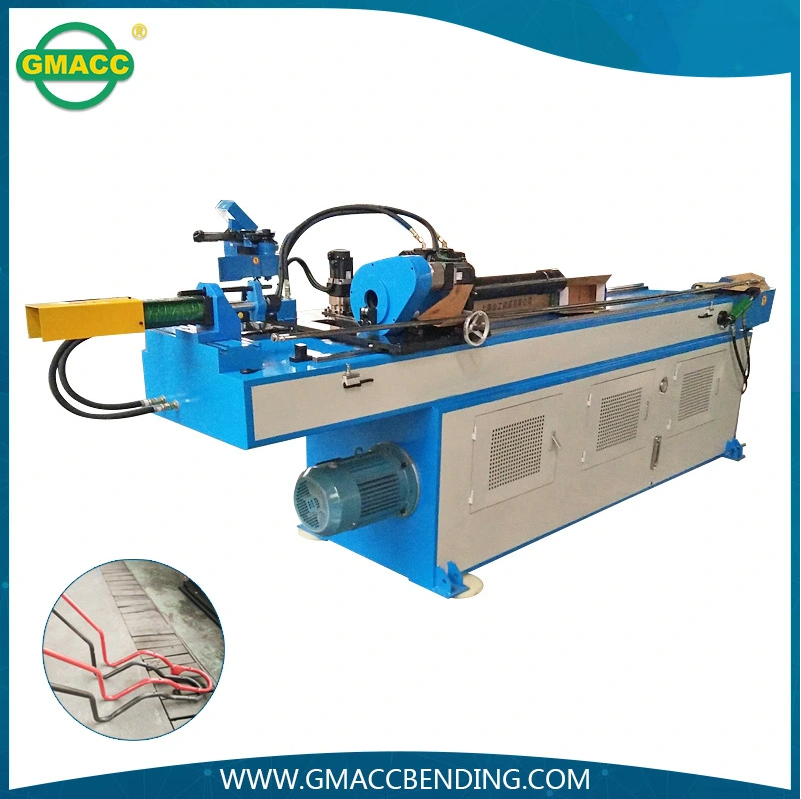
First, you type the bend specs into the cnc tube bending machine. These specs are things like bend radius, angle, and tube shape. Every detail is important because it changes the final tube. If you want good bends, you must check every number you enter.
Springback means the tube tries to go back to its old shape after bending. Harder tubes show more springback.
Weld seams must be lined up right. If you skip this, you might get wrinkles or stretched spots.
Elongation can make the tube wall thinner and change its shape. The outside gets longer, and the inside gets shorter.
Precision tooling helps you get the same results each time.
Using the right lubrication lowers friction and keeps the tube and tools safe.
Tip: Always check your specs twice before you start. Small mistakes can cause big problems later.
Now, you change the machine settings for your tube and project. The GMACC Machinery Pipe Bending Machine has an easy-to-use screen. You can pick the outer diameter, wall thickness, and material type. Each material, like mild steel or aluminum, bends in its own way. You need to match the settings to the tube you use.
The outer diameter and wall thickness matter most.
Different materials need different pressure and support.
Tight bends need extra care to stop problems.
You should also know what your machine can do. Plan your bends with the material in mind. This helps you save material and keeps things running well. Good tool setup is important for perfect bends. Move the mandrel and set the pressure for each material. A four-step setup can make bends better and help tools last longer.
Before you bend a lot of tubes, always do a test bend. This step helps you find mistakes and fix them early. The GMACC Machinery cnc tube bending machine makes this easy with its accurate controls.
When you do a test bend, look for common problems. Here is a table of defects you might see and what causes them:
Defect Type | Description | Causes |
|---|---|---|
Wrinkling | Ripples on the inner curve | Too much compression, poor support |
Wall thinning | Outer curve gets thinner | High tension, tight bends |
Springback | Tube snaps back after bending | Material elasticity, wrong tooling setup |
Ovality | Tube goes out of round | Tight bends, bad tooling alignment |
Cracking | Tube fails or splits | Too much tension, not enough mandrel support |
You can control springback by bending the tube a little more. Mandrels hold up the inside wall and stop it from caving in. Wiper dies and pressure die helpers keep bends neat, even for hard shapes.
Note: The GMACC Machinery cnc tube bending machine uses smart CNC controls. You get very exact and repeatable bends every time. This means you can trust your bends to meet strict size rules.
You can start bending after you set up the machine and program the bends. Follow these steps to use a cnc tube bending system:
Get the material ready. Pick the right tube type and thickness. Measure and cut the tube to the correct size.
Set up the machine. Change the settings and pick the right tools for your job.
Load the tube. Put the tube in the machine and make sure it is tight.
Bend the tube. Turn on the machine and watch it shape the tube.
The GMACC Machinery Pipe Bending Machine works fast and does not break down often. It gives you the same results every time and helps you finish jobs quickly. You can count on it to do many tasks without stopping.
When the tube bending machine is running, you must watch the process carefully. New machines use smart sensors and controls to help you. Here is a table with some common monitoring tools:
Sensor Type | Description |
|---|---|
Bend Guard | Uses cameras and matrix sensors to watch the working area. |
Precision Sensors | Checks for high performance and quality during bending. |
Cameras | Detects objects to prevent accidents. |
Intuitive Control | Gives you a user-friendly interface for easy operation. |
Stay alert for any problems. Look for defects like wrinkling, flattening, or slipping tubes. If you see something wrong, stop the machine and check the settings or tools.
After bending, check each tube for quality and size. Use good optical measurement systems or a Vector Measurement Machine (VMM) to check the tube’s length, rotation, angle, and wall thickness. Make sure the tube fits your project needs.
Common problems are crimping, wrinkling, or cracks. You can stop these by using the right mandrel, changing pressure, and picking the best tools. If you find mistakes, fix your process before making more tubes.
Tip: Check your tubes often and fix problems fast to keep your work good and avoid wasting money.
The GMACC Machinery Pipe Bending Machine makes sure every tube meets strict quality rules. You get bends you can trust every time.
You can get good at using tube bending machines if you know the basics and follow safety rules. Many new users have trouble because they do not understand the machine or set it up wrong. Here is a simple guide:
Challenge | Solution |
|---|---|
Not enough knowledge | Learn about the machine |
Bad setup or poor care | Check and fix it often |
Tube slips or weak pressure | Change clamps and dies |
Think about the environment too. Tube bending uses power, makes waste, and sometimes needs chemicals. Try to save energy and recycle scrap metal when you can.
You should clean the machine after each use. Check for loose bolts and worn parts. Lubricate moving parts often. Follow the maintenance schedule in your manual. This helps your machine last longer and work better.
You can bend steel, aluminum, copper, and some alloys. The machine handles many tube sizes and shapes. Always check the material type before starting. This ensures you get the best results for your project.
A test bend helps you find mistakes early. You can check for problems like wrinkling or cracks. This step saves time and materials. It also helps you adjust settings for perfect bends.
The automated process lets you enter bend specs and settings into the machine. You get fast, repeatable, and accurate bends. This reduces errors and saves time. You can focus on quality and safety.
You should stop the machine and check the settings. Look at the tools and tube placement. Fix any problems before bending more tubes. This keeps your work safe and high quality.